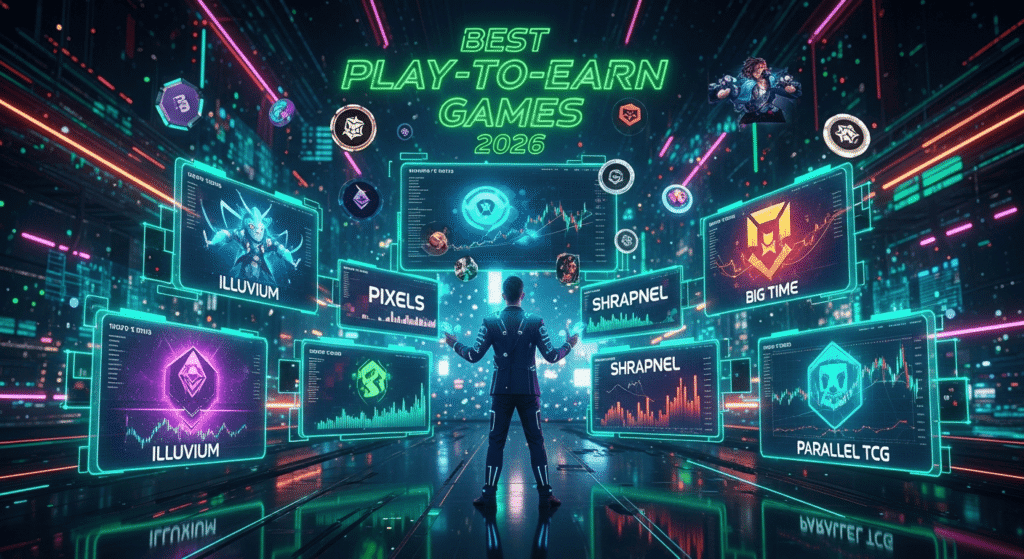
The Play-to-Earn (P2E) ecosystem is entering its most important evolution since Axie Infinity exploded in 2021.
But this time, it’s different: better tokenomics, real studios, sustainable economies and investment-grade assets.
If you want to make money playing games in 2026, you must ignore the “hype noise” and focus on the ecosystems that are actually generating player liquidity, ROI opportunities, and long-term token value.
This is TheGamingLand’s definitive list of the 10 P2E games with the highest potential for earnings, adoption and investment upside in 2026.
Why P2E Matters Again in 2026
After the crash of 2022, most “low-effort P2E projects” disappeared — but the quality builders stayed.
Those builders spent the last years fixing:
Token inflation
Poor reward systems
Unsustainable onboarding models
Weak gameplay
That’s why 2026 will be the biggest year for P2E since the concept was invented. And if you know where to position early… you’ll capture value before the masses arrive.
The 10 Best Play-to-Earn Games for 2026
Below is the list ranked by earning potential, token strength, player growth, and ecosystem fundamentals.
1. Illuvium (ILV) – The AAA King of P2E
Illuvium continues to dominate the P2E space thanks to its polished gameplay and real AAA production quality.
TGL Verdict: Illuvium is the gold standard for investable GameFi. Its deep, integrated ecosystem (Arena, Zero, Overworld) ensures multiple demand sinks for the ILV token, establishing it as the most secure long-term P2E investment. The risk is mitigated by its genuine AAA development and decentralized governance, making it the “Pokémon meets DeFi” with real economic integrity. Its complexity is matched only by its potential.
2. Guild of Guardians (GOG) – Mobile P2E Done Right
Guild of Guardians is leading the mass mobile adoption wave in 2026.
Why it’s powerful:
Mobile-first → large audience
Partnerships with major esports teams
Sustainable hero & item economy
High-quality dungeon gameplay
Earning methods:
Selling heroes and gear
GOG token rewards
Guild earnings
TGL Verdict: GOG serves as the **perfect onboarding ramp** for mass-market users due to its mobile accessibility and highly polished dungeon crawler mechanics. The reliance on tradable heroes and gear, managed on a robust L2 (Immutable X), creates a sustainable economy less prone to inflationary spirals. This is the ideal exposure for beginners who prioritize a polished experience with reliable, consistent returns. A strong, safe bet for mobile P2E.
3. Big Time (BIGTIME) – The Most Active P2E Economy
Big Time surprised the market with massive activity and trading volume in 2024–2025, and it continues trending upward in 2026.
Strengths:
Real item-based economy
High transaction volume
Strong crafting system
Active player base
How to earn:
Selling crafted items
Time Crystals
NFT skins and cosmetics
TGL Verdict: Big Time stands out because its economy is genuinely **driven by player demand for items**, not just inflationary rewards. The rarity of Time Crystals and the need for crafted gear translate into one of the most liquid and active marketplaces in GameFi. It rewards players who commit time to farming and crafting, making it the **top choice for hands-on ‘farmers’ and traders** who thrive on transaction volume.
4. Pixels (PIXEL) – Social P2E with Explosive Growth
Pixels became one of the most played Web3 games ever thanks to its simple, addictive, social mechanics.
Why it works:
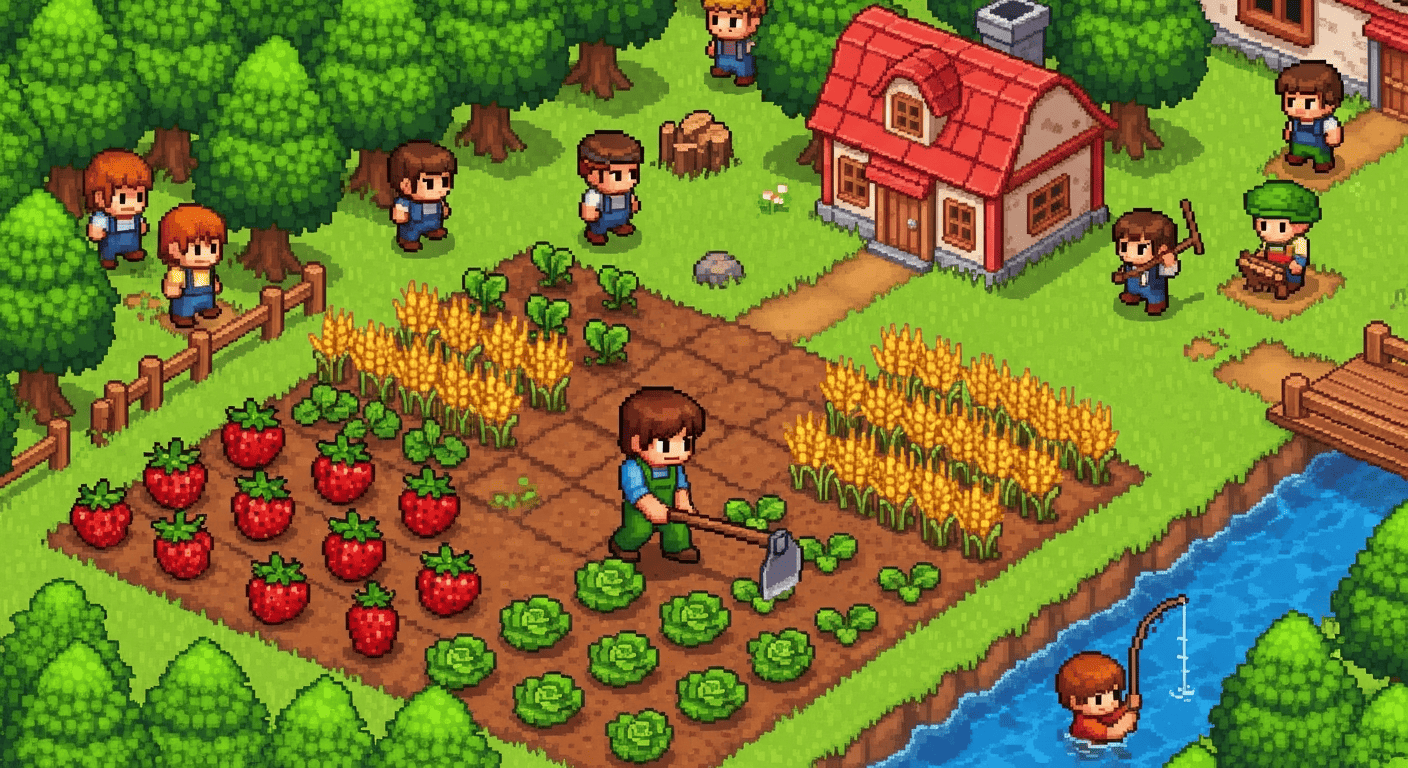
Farmville-style gameplay
Massive daily active users
Ronin chain efficiency
Creator & streamer economy
Ways to earn:
Completing tasks
Selling crafted goods
Land monetization
PIXEL token rewards
TGL Verdict: Pixels has achieved **viral mass adoption** by successfully integrating Web3 principles (like land ownership and token rewards) with simple, casual gameplay reminiscent of Farmville. Its position on the Ronin chain (from Axie Infinity) gives it unparalleled scaling and user base access. This is the **most consistent source of casual earnings** and an excellent lower-risk bet due to its massive and dedicated community.
5. Shrapnel (SHRAP) – The FPS powerhouse
Shrapnel is redefining Web3 AAA shooters.
Why 2026 is its year:
Unreal Engine 5
Extraction shooter (like Escape from Tarkov)
Player-owned maps and assets
Massive esports potential
Earning methods:
Map creation revenue
Selling gear
SHRAP token rewards
TGL Verdict: Shrapnel offers the **highest risk-to-reward ratio** on this list, aiming to be the first truly successful AAA extraction shooter in Web3. The key innovation is user-generated content (maps and assets), which allows top creators to earn ongoing revenue, fundamentally changing the creator dynamic in gaming. While still early-stage and high-capital, its fidelity and vision give it **massive upside, potentially rivaling traditional FPS titles.**
6. Star Atlas (ATLAS/POLIS) – The Metaverse Reborn
After restructures and technical updates, Star Atlas enters 2026 stronger than ever.
Why it resurges:
High-end space exploration
Playable modules now released
Improved economic balance
Token upgrades
Ways to earn:
Starship missions
Resource harvesting
Land ownership
ATLAS rewards
TGL Verdict: Star Atlas is the **highest long-term growth play** in the sci-fi metaverse space. Its early struggles led to a robust economic restructuring, which has strengthened its two-token system (ATLAS for utility, POLIS for governance). While requiring patience due to its immense scope, the recent release of playable modules and strong community dedication confirm its vision. **A serious commitment for patient, long-term investors.**
7. The Sandbox (SAND) – Creator-Driven P2E
SAND remains the leading creator economy in Web3.
Strengths for 2026:
Partnerships with global brands
Mature marketplace
Creator rewards expanding
Large landholder community
Earnings:
Selling assets
Renting land
SAND staking
TGL Verdict: The Sandbox is still the **safest infrastructure investment** in the metaverse space. Its value is driven by institutional partnerships (from Adidas to Snoop Dogg) and a well-established NFT land market, not just gameplay metrics. It’s less about P2E gameplay and more about the Creator Economy, making it a reliable store of value with consistent passive income opportunities through land rental and asset creation. **Low risk, steady long-term growth.**
8. My Pet Hooligan – The High-Personality P2E Universe
A Web3 brand with personality, culture and strong viral energy.
Why it works:
Pixar-level characters
Fun combat and movement
Strong community identity
Expanding IP ecosystem
How to earn:
Trading Hooligan NFTs
AMGI token economy
Creator content monetization
TGL Verdict: My Pet Hooligan is a **cultural phenomenon** first, and a game second. Its appeal lies in its strong brand identity and high-quality, fun combat, attracting a dedicated community. Earnings potential is tied heavily to the success and adoption of the original Hooligan NFT collection and the expansion of the AMGI token ecosystem. It’s a riskier bet on brand dominance, but with **explosive viral upside** if the IP catches mainstream attention.
9. Parallel TCG (PRIME) – The Most Elite Trading Card Game
Parallel is the “Magic: The Gathering” of Web3 — visually stunning & highly strategic.
2026 strengths:
High-quality gameplay
Strong token utility
Esports tournaments
Real competitive meta
Earnings:
PRIME rewards
Card trading profits
Tournament payouts
TGL Verdict: Parallel is the definitive **skill-based P2E game**. Unlike click-to-earn models, earnings are directly proportional to strategic ability and tournament performance, which fundamentally reduces token inflation. The PRIME token’s utility is tightly controlled, ensuring that the economy rewards competitive play and valuable card ownership. **Essential for veteran card game players** seeking a competitive P2E edge.
10. Axie Infinity – The Veteran Reborn
Axie is no longer the face of P2E hype — it’s now a sustainable, rebuilt ecosystem.
Why it stays relevant:
New gameplay modes
Revamped tokenomics
Ronin ecosystem growth
Metagames and esports
Ways to earn:
Breeding
Item crafting
AXS staking
Competitive play
TGL Verdict: Axie Infinity has successfully pivoted from a high-inflation hype cycle to a **stable, complete P2E economy**. The migration to the Ronin chain and the focus on new, diversified gameplay modes (like the competitive Origins) show a commitment to long-term sustainability. It is now a low-risk, established ecosystem—not for 100x gains, but for **reliable, foundational P2E income** and exposure to the highly successful Ronin network.
Comparison Table – Best P2E Games 2026
Game
Best For
Earning Type
Risk Level
TGL Score (0-100)
Illuvium
Investors
Staking + NFTs
Low
97
Guild of Guardians
Mobile players
Heroes + tokens
Medium
93
Big Time
Farmers
Crafting + items
Medium
92
Pixels
Casual players
Tasks + land
Low
91
Shrapnel
FPS players
Maps + gear
High
90
Star Atlas
Sci-fi fans
Missions + land
High
88
The Sandbox
Creators
Land + assets
Low
87
My Pet Hooligan
Culture gamers
NFTs + AMGI
Medium
85
Parallel TCG
Competitors
PRIME + cards
Medium
84
Axie Infinity
Safe P2E
AXS + crafting
Low
83
How to Choose Your P2E Game in 2026
1. Define your time investment
1 hour/day → Pixels, Guild of Guardians
2–3 hours/day → Big Time, Illuvium
3–5 hours/day → Shrapnel, Star Atlas
2. Define your capital investment
$0–100 → Pixels, Axie, Big Time
$100–500 → Illuvium, GOG
$500–5,000 → Shrapnel, Star Atlas, Sandbox
3. Define your playstyle
Shooter → Shrapnel
Strategy → Parallel TCG
RPG → Illuvium
Social → Pixels
🧩 The Alpha Box – P2E Earnings Will Change in 2026
Alpha Insight:
The highest earnings in 2026 will NOT come from “playing the game.” They will come from owning assets that other players need (land, items, crafting rights, maps, blueprints).
In Web3 gaming, ownership is the real income source — gameplay is just the entry point.
This is exactly what our upcoming TGL Alpha Hub tracks:
2026 is the beginning of a new era for Play-to-Earn: Better games, stronger economies, real studios, real rewards.
If you want to earn money playing games:
Start with Illuvium → best long-term ecosystem
Add Big Time or Pixels → stable daily income
Watch Shrapnel & Star Atlas → high-risk, high-reward bets
And stay ahead of the market — before the masses arrive.
✨ GameFi Token Analyzer (AI-Powered)
Found a new gaming token? Enter its name or ticker (e.g., GALA, Illuvium, AXS) to get a quick summary of its utility and recent listings, generated by AI and grounded in current web data.
Searching the web and generating analysis…
🚀 Join the TGL Alpha Hub Waitlist
Want early alerts on P2E tokens, pre-launch games, NFT underpricing, and insider metrics?
The TGL Alpha Hub gives you real-time intelligence that retail players never see.
What Is the Best Exchange for Buying Gaming Tokens?
What Is the Best Exchange for Buying Gaming Tokens? (Binance vs. Coinbase vs. Bybit)
The intersection of crypto trading and gaming is where the next digital gold rush is happening.
But here’s the real problem: not every exchange gives you access to the gaming tokens that matter most.
If you’ve ever tried to buy a small-cap metaverse token or participate in a new GameFi launch, you already know the frustration. Some platforms simply don’t list them. Others make deposits a nightmare. And a few, frankly, don’t understand gamers as investors.
This guide is your definitive breakdown of the top three exchanges for gaming token investors: Binance, Coinbase, and Bybit.
We’ll analyze them not just as crypto platforms, but as investment infrastructures for the gaming economy.
The Problem: “Why Can’t I Find That Token?”
The GameFi space evolves fast. One day, a project like Gala Games or Illuvium is niche; the next day, it’s on every trader’s radar.
By the time most users hear about it, the price has already pumped — usually because early access traders on Binance Launchpad or Bybit Earn have already positioned themselves.
The truth:
Most gaming tokens debut off major exchanges, on decentralized platforms like PancakeSwap or Uniswap.
By the time they hit Coinbase or Binance, the early gains are gone.
That’s why the exchange you use determines whether you’re a spectator or a profit-taker in the GameFi ecosystem.
The Analysis: Binance vs. Coinbase vs. Bybit
Let’s break it down in investor language.
1. Binance — The GameFi Powerhouse
Binance is, without question, the go-to exchange for gaming tokens. It lists the largest variety of GameFi projects and runs regular Launchpads for early access.
Pros:
✅ Largest token selection — From GALA to ILV, SAND, AXS, TLM, and more.
🚀 Launchpad & Launchpool access — You can invest in tokens before public listing.
💰 Low fees & deep liquidity — Excellent for both small traders and whales.
🧠 Advanced tools — Futures, copy trading, and staking yield options for GameFi tokens.
Cons:
⚠️ Complex interface — Beginners might find the ecosystem overwhelming.
⚠️ KYC requirements can vary by region, limiting fast access.
Bottom line: Binance is for those who see gaming tokens as an asset class, not just collectibles.
2. Coinbase — The Safe Gateway (But Limited Arsenal)
Coinbase is the “Apple” of crypto exchanges — simple, polished, and heavily regulated.
But that safety comes at a cost: limited gaming token availability.
Pros:
🔒 High security and regulation — A US-listed company with strict compliance.
🪙 Simple user interface — Ideal for newcomers or casual investors.
📱 Excellent mobile app for quick purchases.
Cons:
❌ Limited token range — You’ll find SAND, AXS, MANA, but miss out on most emerging titles.
💸 Higher fees — Especially for instant buy/sell options.
🚫 No Launchpad or pre-listing access — You’ll always be late to the party.
Bottom line: Coinbase is perfect for investors who prioritize security over alpha, but not for those seeking early GameFi exposure.
3. Bybit — The Trader’s Shortcut to New Gaming Tokens
Bybit has quietly become a favorite among GameFi insiders for one reason:
It lists new tokens early, often before they appear on Coinbase, and offers derivative trading for GameFi pairs.
Pros:
⚡ Fast listings of trending tokens.
💹 Derivatives & perpetual futures — You can long/short tokens like GALA, AXS, or MANA.
🎯 Low trading fees and flexible staking rewards.
🪙 Strong focus on new listings and community votes for upcoming projects.
Cons:
⚠️ Not available in all countries — Regional restrictions apply.
💼 More trading-focused — Not ideal for long-term holders seeking passive yield.
Bottom line: Bybit is the agile trader’s platform, ideal for catching the next wave before it goes mainstream.
Comparative Table: Exchanges for Gaming Tokens
Feature
Binance
Coinbase
Bybit
GameFi Token Variety
🔥 Highest
⚪ Medium
⚡ High
Launchpad Access
✅ Yes
❌ No
⚡ Yes (limited)
Ease of Use
⚪ Moderate
🟢 Easiest
⚪ Moderate
Fees
💰 Low
💸 High
💰 Low
Security & Regulation
🟢 Strong
🟢 Strongest
⚪ Good
Trading Tools
🧠 Advanced
⚪ Basic
⚡ Pro-level
Early Access Opportunities
🚀 Excellent
❌ None
⚡ Good
Ideal For
Investors & Yield Hunters
Beginners
Pro Traders
The Verdict (TGL’s Official Position)
If your goal is long-term exposure to the GameFi market, there’s only one logical choice:
Binance.
It’s not just about the number of tokens — it’s about the ecosystem. Binance’s Launchpad, staking programs, and liquidity make it the most complete platform for a gaming token investor.
If you’re more of a short-term trader, Bybit is your edge. Its rapid listings and derivative options can multiply your ROI — if you know how to manage risk.
Coinbase? It’s your safe bank account for holding the majors. But when it comes to alpha, it’s the slowest player on the field.
🧩 Alpha Box – The Hidden Edge
Fact: The best time to buy a gaming token is before it hits Binance or Coinbase. Why: When an exchange starts accumulating a token in its wallets, it’s usually a sign of an upcoming listing.
Our upcoming TGL Alpha Hub will track these on-chain movements in real time — alerting you before the crowd knows.
How to Choose the Right Exchange (Decision Framework)
Here’s a quick method to decide where you should trade gaming tokens.
Step 1. Define Your Objective
Are you a collector, trader, or investor?
Objective
Best Exchange
Reason
Buy and hold top GameFi tokens
Binance
Liquidity and staking yields
Trade short-term volatility
Bybit
Fast listings and derivatives
Safe exposure to top projects
Coinbase
Regulation and simplicity
Step 2. Check Token Availability
Use CoinMarketCap’s “Exchanges” tab to see where each token trades. If you can’t find your target project on Coinbase — it’s probably already active on Binance or Bybit.
Step 3. Monitor Early Signals
Watch Binance Launchpad announcements.
Follow Bybit’s Twitter for “new listing” posts.
Track on-chain wallets for large exchange movements.
Advanced Alpha: How to Catch Tokens Before They List
Professional investors don’t wait for listings. They track exchange wallet behavior and smart money flows.
Tools You Can Use:
Nansen.ai — Tracks smart wallets that often buy before listings.
DexTools.io — Reveals liquidity changes in pre-launch tokens.
TGL Alpha Hub (coming soon) — Simplifies it all, sending you early alerts for GameFi tokens showing unusual exchange accumulation.
💡 Alpha Tip:
A token’s first liquidity spike on-chain is often the moment whales start preparing for listing exposure. Spot it early, and you can front-run the crowd.
Risk Management: Don’t Let FOMO Kill Your ROI
Even in GameFi, risk = reality. Not every token listed on Binance will 10x.
Here’s how to protect your capital like a pro:
Allocate capital by tiers:
60% → Top-tier GameFi tokens (AXS, SAND, GALA).
30% → Mid-cap bets (ILV, MAGIC, PYR).
10% → Experimental new listings.
Use stop-losses.
Platforms like Bybit allow you to set precise exit levels to avoid getting liquidated.
Stake, don’t idle.
Many exchanges let you earn 5–20% APY on idle gaming tokens.
The narrative is clear.
GameFi isn’t a bubble — it’s the next interface between Web3 and human behavior.
Every in-game economy, NFT marketplace, and metaverse asset will run on tokens.
The difference between making money and watching others make it…
…is using the right exchange at the right time.
So before the next bull run starts, set up your base of operations:
Binance for ecosystem access
Bybit for new listings
Coinbase for secure holdings
Then connect it all to your Alpha Hub — because that’s where the real edge lives.
🚀 Join the Alpha Hub Waitlist
Don’t just trade — anticipate.
The TGL Alpha Hub scans exchange wallets, token contracts, and GameFi projects to detect early signals before listings go public.
👉 Join the waitlist now.
Be the first to catch the next Axie Infinity, Gala Games, or Illuvium — before the rest of the world knows their name.
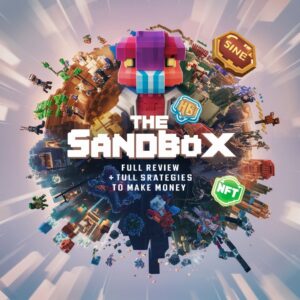
The Sandbox Full Review + Strategies to Make Money
The Sandbox is an innovative virtual world where players can build, own, and monetize their gaming experiences using blockchain technology. Since its inception, it has garnered significant attention in the gaming and cryptocurrency communities. Whether you’re a novice or a seasoned player, this guide is designed to provide valuable insights and actionable tips.
What is The Sandbox?
Overview
The Sandbox is a decentralized virtual world built on the Ethereum blockchain. It allows users to create, buy, sell, and trade digital assets in the form of NFTs (non-fungible tokens). The platform is powered by its native utility token, SAND, which is used for transactions, governance, and staking.
Core Features
Voxel-based Environment: The Sandbox employs a voxel-based design, reminiscent of Minecraft, allowing for detailed and creative world-building.
NFT Marketplace: Users can trade their assets, such as land, avatars, and objects, on The Sandbox’s marketplace.
Game Maker Tool: This tool enables users to create and monetize their own games without requiring coding knowledge.
Play-to-Earn Model: Players can earn SAND and other rewards by participating in various activities and games within the ecosystem.
Gameplay Experience
Creating and Exploring
The Sandbox offers a rich, immersive experience where creativity knows no bounds. Players can design their own worlds using the intuitive voxel editor and Game Maker tool. Exploring other players’ creations adds to the enjoyment, as the diversity of worlds showcases the vast potential of the platform.
Owning Land
Land ownership is a crucial aspect of The Sandbox. Players can purchase virtual plots of land, which they can develop or rent out to other users. Owning land provides opportunities for revenue generation through advertisements, hosting events, or charging for access.
Social Interactions
The social aspect of The Sandbox is robust, with opportunities to connect with other players, collaborate on projects, and participate in community events. This fosters a sense of community and enhances the overall gaming experience.
Strategies to Make Money in The Sandbox
1. Buying and Selling Land
One of the most lucrative ways to make money in The Sandbox is through real estate investment. Here’s how:
Identify Prime Locations: Invest in land located near popular attractions or high-traffic areas to maximize visibility and potential income.
Develop and Monetize: Create engaging experiences or virtual businesses on your land to attract visitors and generate revenue.
Flip Properties: Buy undervalued land, develop it, and sell it at a higher price.
2. Creating and Selling NFTs
Creating unique digital assets can be a profitable venture. Consider the following tips:
Design Unique Items: Use the voxel editor to create rare and appealing items that stand out in the marketplace.
Leverage Trends: Stay updated with current trends and popular themes to create in-demand assets.
Collaborate with Artists: Partnering with talented artists can enhance the appeal and value of your NFTs.
Utilize the Game Maker tool to develop engaging games that attract players. Here’s how to monetize your games:
Implement Play-to-Earn Mechanics: Design games that reward players with SAND or other valuable assets, encouraging more playtime and engagement.
Charge Entry Fees: For premium experiences, consider charging a small fee for access.
In-Game Purchases: Offer additional content or items for purchase within your games.
4. Staking and Governance
Staking SAND tokens can provide passive income and influence over the platform’s development. Here’s how to get started:
Stake Your SAND: By staking SAND, you can earn rewards in the form of additional tokens.
Participate in Governance: Use your staked tokens to vote on proposals and changes to the platform, ensuring your interests are represented.
Diversify Your Investments
Tips for Maximizing Your Earnings
Avoid putting all your resources into one venture. Spread your investments across land, NFTs, and game development to minimize risk and maximize returns.
Stay Informed
Keep up-to-date with platform updates, community news, and market trends. Being informed allows you to make strategic decisions and capitalize on new opportunities.
Network with Other Players
Building relationships within the community can open doors to collaborations, partnerships, and insider knowledge that can be beneficial for your ventures.
Optimize Your Creations
Ensure your games and assets are of high quality. Engaging and well-designed creations are more likely to attract users and generate revenue.
The Sandbox presents a unique opportunity for gamers and investors alike. Its blend of creativity, social interaction, and blockchain technology creates a dynamic environment where anyone can thrive. By understanding the platform and employing strategic approaches, you can not only enjoy a rich gaming experience but also unlock various avenues for generating income.
Secret Tips + Tricks from the Pros to Master Fortnite
Fortnite continues to be one of the most popular battle royale games globally, attracting millions of players who are eager to sharpen their skills and secure those elusive Victory Royales. In 2024, the landscape of Fortnite is more competitive than ever. Here are some secret tricks from the pros that will help you master Fortnite and dominate the battlefield this year.
Understanding the Basics: Building Blocks of Success
Mastering the Fundamentals
Before diving into advanced techniques, it’s crucial to have a firm grasp of the fundamentals. This includes:
Effective Resource Management: Always ensure you have ample materials (wood, stone, metal) before engaging in battles. Pro players consistently gather resources, even during quiet moments in the game.
Weapon Proficiency: Familiarize yourself with various weapons and their strengths. Practice with shotguns for close combat, rifles for mid-range, and sniper rifles for long-range engagements.
Adjusting your game settings can significantly impact your performance. Here are some recommended settings:
Sensitivity Settings: Customize your sensitivity to find a balance between quick reactions and precise aiming.
Key Bindings: Efficient key bindings can make building and switching weapons faster and more intuitive. Study and replicate the key bindings of professional players.
Graphics Settings: Ensure your graphics settings are optimized for performance. Lowering some visual settings can improve frame rates and reduce lag.
Advanced Strategies: Taking Your Gameplay to the Next Level
Building Techniques: From Basics to Complex Structures
Building is a core mechanic in Fortnite that separates the good from the great players.
Basic Building
Walls and Ramps: Learn to quickly build walls and ramps to protect yourself and gain high ground.
90s: Practice the 90-degree turn build (90s) to elevate quickly and surprise opponents.
Advanced Building
Turtle Defense: Master the art of turtling, where you build a box around yourself for protection.
Piece Control: Control the pieces in fights by editing structures to trap and outmaneuver opponents.
Combat Tactics: Outsmarting and Outplaying Your Opponents
Positioning and Awareness
High Ground Advantage: Always aim to have the high ground in engagements. It provides better visibility and makes it harder for enemies to hit you.
Sound Cues: Pay attention to in-game sound cues, such as footsteps and building sounds, to anticipate enemy movements.
Engaging in Fights
Pre-Fight Preparation: Ensure you are fully healed and have ample shields before engaging.
Building During Fights: Use building to create cover and confuse opponents during firefights.
Pro Tips and Tricks: Insights from the Top Players
Efficient Resource Gathering
Early Game: Drop in areas with abundant resources. Hit weak points on trees and structures to gather materials quickly.
Late Game: Keep an eye on your resource count and gather whenever safe. Prioritize metal for its durability.
Weapon Loadout Optimization
Balanced Loadout: Carry a mix of weapons for different scenarios – a shotgun for close range, an assault rifle for mid-range, and a sniper for long-range.
Utility Items: Include utility items like grenades, healing items, and mobility tools such as launch pads or grapplers.
Game Sense and Adaptability
Map Knowledge: Familiarize yourself with the map’s layout, including popular drop spots, high loot areas, and rotation paths.
Adaptability: Be ready to adapt your strategy based on the situation. Sometimes it’s better to avoid fights and position yourself for the late game.
Practice Makes Perfect: Training Routines of the Pros
Solo and Creative Modes
Creative Mode: Spend time in Creative Mode practicing building and editing. Set up custom courses to simulate in-game scenarios.
Solo Matches: Play solo matches to improve your individual skills without relying on teammates.
Review and Learn
Replay Analysis: Review your game replays to identify mistakes and areas for improvement.
Learn from the Best: Watch streams and videos of professional players. Pay attention to their decision-making and mechanical skills.
Staying Ahead in 2024
Mastering Fortnite in 2024 requires dedication, practice, and a willingness to learn and adapt. By understanding the fundamentals, employing advanced strategies, and continually honing your skills, you can elevate your gameplay and dominate the competition. Stay sharp, keep practicing, and remember – every game is an opportunity to improve.
Legacy NFT Game Review: Pioneering the Future of Blockchain Gaming
The Legacy NFT Game is a scrum of advanced innovation, resplendent imagination, and the zeal of engagement, setting the frontier for gaming of a digital kind and for the greater good of the players and investors alike. This comprehensive review, therefore, will delve into the main features of the Legacy NFT Game, from its gameplay meccas to its economic model, community engagement, and technological infrastructure, providing a comprehensive guide for players in navigating and maximizing experience within this pioneering platform.
Gameplay Mechanics and User Experience
Legacy NFT Game offers players not just a game but a dynamic ecosystem of capitalism where every action has real-world implications. The game inherently combines strategy, creativity, and economic acumen, allowing the players to build, manage, and expand their digital empires.
Key Features:
Asset Ownership: The in-game assets are owned by players in the form of NFTs, including land parcels, buildings, characters, and special items. The ownership is maintained in the blockchain, assuring transparency and safety for players.
Creative Freedom: Players can design and build their virtual worlds. This aspect will not only provide fun for players but also rise in value.
Dynamic Economy: An economically-driven game, a complete mirror of the real-life economy, has its own economic system and includes specific aspects such as supply and demand dynamics, trade, and investment opportunities. The economy of the game functions on a native cryptocurrency of this platform, allowing transactions, staking, and governance.
Technology Innovation and Blockchain Integration
The essence of the innovative technological building block is their seamless, secure, and transparent nature. The platform integrates the blockchain only as a core backbone. With such a merging, as well as the implementation of verifiable ownership, rarity for rare items, player-driven economy, security, transparency, and much more can only be operated in a fully decentralized network.
Advantages of Using Blockchain:
Security and Transparency: All transactions, ownership records, and every other occasion are stored on the blockchain, thus ensuring security and transparency.
Interoperability: Assets within one game could be used in various games or other platforms. This represents the importance of NFTs in offering an increased value and utility in all assets with time.
Decentralization: If any problem with the server were to occur, the game would live on thanks to the decentralized network, resistant to censorship and external control.
Community, Ecosystem, and Network
The community of a game operating in the blockchain space depends on the community and the ecosystem that the game allows developing. Legacy NFT Game accomplishes this in having an energetic mass of players, developers, and investors, making the game more developed and better.
Community-Driven Development:
Governance: Players can actively contribute to the game’s development and decision-making through governance tokens, and they can be sure of what will appear in the game.
Collaborative Events: Regular events and contests can build a sense of community and competition between the players to inspire interaction and participation within the game.
Marketplace Dynamics: The active marketplace where buying, selling, or trading the assets is subjected to haggling based on rarity, demand, and utility.
The Legacy NFT Game is not just a game; it’s a peek into the future of gaming and digital ownership. The potential of blockchain technology is realized through it, which provides the players with an exciting gaming experience that is fun and highly engaging. Legacy NFT Game, due to its challenging nature, brings a brand-new category of playing, trading, and investing in the entire ecosystem of NFT games, promising to evolve as players try to push its limits in making it greater.
In the Legacy NFT Game, not just the technological and gameplay innovations, but they help us see how sustainability in gaming economies and environmental consciousness can become precedent within the blockchain domain. This segment of this review explores a fine balance, which Legacy NFT Game maintains with economic viability, player engagement, and ecological sustainability; hence, further strengthening its position as a forward-thinking entity in the gaming industry.
Economic Viability and Sustainability
Legacy NFT Game has designed an economic model that is both profitable for players and sustainable over time. This model ensures fairness and encourages a healthy, dynamic economy that benefits all stakeholders.
P2E Model: The game’s P2E model rewards players for their time and effort within the game. Whether it be by accomplishing quests, winning battles, or trading on the marketplace, players can earn in the form of cryptocurrencies of the game, whose value is real.
Tokenomics and Sustainability: The token distribution is carefully engineered to prevent excessive inflation or deflation. This includes limiting the edition of NFTs, staking rewards, and transaction fees that fund community pools. This particular section of the review discusses how Legacy NFT Game creates an economic balance between financial participation, investment, and sustainability.
Financial Inclusion and Participation Opportunities: Legacy NFT Game paves the way for making financial participation accessible and inviting for many players who aspire to make money in blockchain gaming. This features very low entry barriers and many ways for earning.
Engagement and Retention Strategy
Engagement and retention are essential within the success of any game, more so in blockchain where competition is fierce. Legacy NFT Game has a few strategies of engaging players and keeping them hooked to their digital journeys.
Engagement Mechanisms:
Regular Updates and Expansions: Regular updates, new content, new features, and updates regularly. This keeps the game exciting and worth trying.
Social and Co-op Play: Legacy NFT Game has a few important features that really give a sense of community and social interaction like guilds, alliances, and cooperative missions that add a feel of social community to a gameplay and encourage players to work together.
Reward Systems: Apart from the P2E model, the game incorporates other systems of reward like badge achievement, which lead to the leaderboard, and seasonal events for engrossment.
Eco-Friendly Approach in Blockchain Gaming
In an age when environmental impact is one of the prominent concerns, Legacy NFT Game firmly has a lead in this respect within the blockchain gaming space with its commitment to go green. The game is deliberate in adopting eco-friendly practices over the big spender wielding energy as a major hot button of criticism that blockchain technology faces.
Environmental Initiatives:
Efficient Blockchain: Legacy NFT Game operates on a blockchain efficiency that ensures low carbon footprinting on transactional NFT activities and gameplay.
Sustainable NFTs: Efforts are made to ensure that NFT buying, selling, and trading in the game impact the environment as little as possible. It includes the operation with green servers and carbon offset initiatives.
Community Environment: Legacy NFT Game actively engages the community in conservation work, holding events such as donations, awareness campaigns, and joining hands with eco-conscious organizations.
Legacy NFT Game, in all this, strives to stay ahead of the game by creating a new standard for blockchain gaming as well as promoting a green and inclusive future. These efforts also ensure not just a better but an excellent gaming experience while at the same time positively contributing to the broader digital and physical ecosystem.
In this concluding analysis of Legacy NFT Game, we move on to a discussion of its future view, potential challenges, and the entire perspective this has on the gaming industry and even beyond. This holistic perspective will encompass issues of scalability, prospective hurdles it may come across, and its impact in determining how the perception and acceptance of blockchain technology are mediated through the mainstream gaming sphere.
Future Outlook and Scalability
Scalability emerges as an essential factor for the long-term sustenance of success of Legacy NFT Game. The game’s infrastructure is laid in a way that will offer room for expansion with scalable blockchain technology able to process higher rates of user loads and transactions without compromising on performance or security.
Multiple Platform Integration: Enabling the game on more than one platform—including mobile devices—will raise more awareness and usability for its users.
Globally Reach: Localization and cultural adaptation are crucial in terms of making the game appealing to a global audience and breaking down language and cultural barriers.
Expansion of Ecosystem: Introduction of novel game modes, assets in the form of NFTs, and partnerships with other blockchain projects can allow the game to expand its ecosystem, offering players fresh experiences and investment opportunities.
Potential Challenges and Mitigation
Despite a bright future, various obstacles stand ahead of the vision of Legacy NFT Game. It is imperative to anticipate challenges that may arise and devise strategies that would help mitigate these challenges.
Challenges and Solutions:
Market Saturation: With the rise of blockchain gaming as a major industry, it is the challenge of saturation in the game’s environment. Differentiation through a unique gameplay mode, community engagement, and continuous innovation will be the key.
Regulation Boundaries: Changing crypto regulation settings could have an impact on how the game operates. Staying adaptable and regulatory compliant with a global-based framework is critical.
Technical Scalability: Scaling the game to accommodate an increasing user base demands that the performance of the game remains constant and transaction processing is highly scalable. The infrastructure supporting the game needs to be upgraded and solutions intended for blockchain scalability adopted to cater to user needs.
Impact on Gaming and Blockchain Adoption
Legacy NFT Game stands at the crossroads of gaming and blockchain technology, possibly playing a significant role in the driving and acceptance of blockchain within the wider gaming community.
Influence and Opportunities:
Mainstream Acceptance: Could provide a profitable and fun gaming experience, which therefore encourages non-blockchain gamers to embark on the idea of blockchain technology.
Innovation Hub: This can also serve as a testing ground for various blockchain-related features and economic models that would, in future, be adopted in different games and projects.
Community and Culture: Can evolve a strong and sustainable community that may not only provide innovation and cooperation but will also remain committed to environmental and social responsibility.
Legacy NFT Game opens a new era for blockchain gaming, thus positively influencing the broader narrative of digital ownership, economic empowerment, and sustainability in the digital age. The game, through its unique gameplay, economic model, and commitment to the community and environment, sets itself for long-term success that might be an industry benchmark. Looking ahead, its adaptability and readiness to innovate and connect with its community, all the while based on its core ideas, will be crucial in reaching its potential and ensuring its long-term success in the evolving digital landscape.
Mirandus Review 2024: The Blockchain Game’s Pros and Cons
In the ever-evolving landscape of blockchain gaming, Mirandus stands out as a beacon of innovation and player engagement. As we delve into the intricate world of this game in 2024, it’s crucial to understand the elements that make it both unique and controversial. This review aims to provide a comprehensive guide, dissecting the pros and cons of Mirandus, to offer potential players and blockchain enthusiasts a clear perspective.
What is Mirandus?
Mirandus is a blockchain-based MMORPG (Massively Multiplayer Online Role-Playing Game) that leverages the power of decentralized technology to give players unprecedented control over their in-game assets, environment, and destiny. At its core, Mirandus is an exploration of a vast fantasy world where players can own land, build kingdoms, and engage in epic quests and battles. The game’s economy and ownership are powered by NFTs (Non-Fungible Tokens), allowing players to possess unique items, lands, and characters that have real-world value.
Key Features
Decentralized Ownership: Players have true ownership of their in-game assets, backed by blockchain technology.
Dynamic World: A vast, open world that evolves based on player actions and decisions.
Player-Driven Economy: An economy entirely driven by players through trading, crafting, and resource management.
Unique Assets as NFTs: Everything from land to gear can be owned as NFTs, providing real-world value.
The Pros of Mirandus
1. Unprecedented Player Ownership and Control
The cornerstone of Mirandus’s appeal is the unparalleled level of ownership and control it offers players over their in-game assets. Through the use of blockchain technology, players can truly own, buy, sell, and trade their assets as they see fit, offering a level of autonomy rarely seen in traditional video games.
2. A Living, Breathing World
Mirandus’s dynamic world is another significant draw. The game is designed to be ever-changing, with player actions directly influencing the environment and the direction of the game’s narrative. This level of interactivity fosters a deeply immersive experience.
3. Economic Empowerment
The player-driven economy in Mirandus allows for genuine economic empowerment. Players can craft items, trade resources, and manage assets in ways that can have real financial benefits, bridging the gap between virtual and real-world value.
4. Community and Social Interaction
At its heart, Mirandus is a community-driven game. It encourages collaboration, trade, and social interaction among players, creating a vibrant, supportive, and engaging community.
The Cons of Mirandus
1. Steep Learning Curve
For newcomers, the complexity of Mirandus’s systems and economy can be daunting. The steep learning curve may deter players unfamiliar with blockchain technology or those seeking a more casual gaming experience.
2. Initial Investment
The requirement for an initial investment to purchase NFTs for gameplay can be a barrier to entry. This aspect limits accessibility and could exclude potential players who are unwilling or unable to invest.
3. Volatility of NFT and Cryptocurrency Markets
The game’s reliance on NFTs and cryptocurrency means that players’ assets are subject to the volatility of these markets. This unpredictability can significantly impact the game’s economy and the real-world value of in-game assets.
4. Technical Barriers
Blockchain games, including Mirandus, face technical challenges such as scalability, transaction fees, and interoperability. These issues can affect gameplay quality and user experience.
Mirandus represents a bold step forward in the fusion of gaming and blockchain technology, offering a unique and engaging experience for players. While it offers significant advantages in terms of ownership, economy, and community, potential players must also navigate its complexities and investments. As we look towards the future of gaming, Mirandus exemplifies the potential and challenges of integrating blockchain technology into the gaming world. The balance it strikes between innovation and accessibility will likely influence its success and the broader acceptance of blockchain gaming.
Deep Dive into Mirandus Gameplay Mechanics
One cannot discuss Mirandus without delving into the rich and complex gameplay mechanics that define the experience. At the heart of Mirandus is a gameplay system that rewards strategy, planning, and social interaction, setting it apart from many other titles in the blockchain gaming space.
The Role of NFTs in Gameplay
NFTs are not just a means of transaction within Mirandus; they are integral to the gameplay itself. Each NFT represents a unique asset within the game, from land parcels where players can build and manage their domains to rare items and powerful characters. This integration of NFTs ensures that every player’s actions and decisions carry weight, potentially impacting the game’s economy and power dynamics.
Quests and Adventures
Quests in Mirandus are designed to be more than just tasks; they are adventures that can lead to significant discoveries, alliances, and conflicts. These quests often require players to explore unknown territories, engage in combat, or solve complex puzzles. The outcomes can lead to the acquisition of valuable assets or alterations in the player’s standing within the game world.
Building and Managing Kingdoms
Owning land in Mirandus is not merely about possession; it’s about creation and management. Players can build structures, manage resources, and defend their territories from other players and NPCs. This aspect of the game emphasizes strategy and economic planning, as well as the importance of alliances and social networks within the game.
Combat and Conflict
Combat in Mirandus is both a challenge and an opportunity. Players can engage in battles for resources, territory, or glory. The combat system is designed to be deep and strategic, with different character classes, items, and tactics playing a role in the outcome of each encounter. This creates a dynamic environment where strength and cunning can lead to significant advantages.
Challenges and Considerations
Despite the exciting opportunities within Mirandus, players face several challenges. The complexity of managing assets, understanding the economy, and strategizing for quests and combat can be overwhelming. Additionally, the social aspect of the game, while enriching, requires players to navigate alliances, rivalries, and collaborative projects, adding another layer of complexity to the experience.
The Social Impact of Mirandus
Beyond gameplay, Mirandus has a profound social impact. It fosters a community of players who share interests not only in gaming but in the principles of blockchain technology and digital ownership. This shared interest has led to the formation of guilds, alliances, and friendships that extend beyond the game, illustrating the powerful community-building aspect of blockchain games.
The Future of Mirandus
Looking ahead, the developers of Mirandus have teased expansions, updates, and new features that promise to keep the game fresh and engaging. The potential for new quests, lands, and gameplay mechanics could further deepen the immersive experience Mirandus offers. Moreover, ongoing developments in blockchain technology could enhance the game’s performance, accessibility, and features, ensuring that Mirandus remains at the forefront of blockchain gaming innovation.
Strategic Insights for New Players
Entering the world of Mirandus can be as daunting as it is exciting for new players. With its rich lore, complex economy, and deep gameplay mechanics, understanding the strategic underpinnings is crucial for anyone looking to make their mark. Here, we offer insights and strategies to help new entrants navigate the realms of Mirandus effectively.
Starting with a Solid Foundation
Research and Planning: Before diving into the game, new players should invest time in understanding the basics of blockchain technology, NFTs, and the specific mechanics of Mirandus. Familiarizing oneself with the game’s economy, classes, and land ownership principles can provide a significant advantage.
Asset Management: Wisely managing your initial assets, whether they be NFTs or in-game currency, is critical. Initially, focus on assets that will offer the best return on investment, whether through utility in gameplay or potential value in the game’s marketplace.
Engaging with the Community
Join Guilds and Alliances: The community in Mirandus is a valuable resource. Joining guilds or forming alliances can provide support, resources, and protection, especially for players looking to expand their territory or embark on challenging quests.
Networking and Collaboration: Engage with the community through forums, social media, and in-game events. Collaborating with other players can lead to mutually beneficial outcomes and enhance the overall gameplay experience.
Expanding Your Domain
Strategic Expansion: As you acquire more resources and assets, consider expanding your domain thoughtfully. Investing in land in strategically valuable locations or acquiring rare items that will increase in value over time can significantly impact your success.
Diversification: Diversify your assets to protect against market volatility. Balancing your portfolio between land, items, and currency can mitigate risks associated with the fluctuating value of NFTs and cryptocurrencies.
The Ethical Considerations of Blockchain Gaming
As blockchain gaming continues to grow, ethical considerations become increasingly important. The environmental impact of blockchain technology, the potential for speculative bubbles, and the importance of creating inclusive and accessible gaming experiences are all critical issues that the community and developers must address.
Promoting Sustainability
Developers and players alike are encouraged to consider the environmental impact of blockchain technology. Seeking out and supporting platforms that use energy-efficient consensus mechanisms can help mitigate the carbon footprint associated with NFT transactions.
Creating pathways for players of all backgrounds to participate in Mirandus and the broader blockchain gaming ecosystem is vital. Efforts to lower the barrier to entry, such as scholarship programs or free-to-play models, can help make the game more accessible to a wider audience.
Looking to the Future
As Mirandus continues to evolve, the possibilities are endless. With advancements in blockchain technology, we can anticipate improvements in scalability, user experience, and environmental sustainability. The game’s roadmap hints at expansive new lands to explore, deeper lore to uncover, and innovative features that will further blur the lines between virtual and real-world value.
The future of Mirandus and blockchain gaming as a whole is a journey of discovery, innovation, and community. As players delve deeper into this world, they’re not just participating in a game but are at the forefront of redefining what gaming can be. This exploration of digital ownership, economic empowerment, and community collaboration is just the beginning, and the legacy of Mirandus will likely influence the future of gaming for years to come.
Mirandus represents a groundbreaking blend of gaming, technology, and community. It offers a unique window into the future of interactive entertainment, where players are empowered to own, create, and shape their experiences in unprecedented ways. As we stand on the brink of this new era, the world of Mirandus invites us to imagine, explore, and redefine the boundaries of what a game can be.
VOXverse Review: Exploring the Metaverse in the Latest Virtual Phenomenon
In the rapidly evolving landscape of virtual worlds and digital experiences, one name that has been capturing the attention of enthusiasts and newcomers alike is Voxverse. This comprehensive review delves into the multifaceted aspects of Voxverse, exploring its unique offerings, technological advancements, and the impact it has on the digital domain. Through an in-depth analysis, we aim to provide a detailed guide that not only enlightens but also enriches your understanding of this virtual phenomenon.
Exploring the Foundations of VOXverse
A Glimpse into Voxverse’s Genesis
Voxverse, at its core, is a virtual world that transcends the traditional boundaries of online interaction and digital exploration. Born from the innovative minds seeking to merge social networking with immersive virtual reality (VR), Voxverse offers a platform where users can interact, explore, and create in a dynamic environment. The genesis of Voxverse was marked by the ambition to provide a digital space where the lines between reality and virtuality blur, fostering a community that thrives on creativity, social interaction, and shared experiences.
Technological Backbone and Innovations
Central to Voxverse’s allure is its robust technological framework, which enables a seamless and immersive experience for users. Utilizing cutting-edge VR technology, Voxverse creates a vivid and interactive world where users can engage in a plethora of activities, ranging from exploring virtual landscapes to participating in interactive events. The platform’s architecture supports real-time interactions, high-fidelity graphics, and user-generated content, setting a new benchmark for virtual world experiences.
The Multiverse of VOXverse: Features and Functionalities
Immersive Environments and Landscapes
One of the standout aspects of Voxverse is its diverse range of environments and landscapes. From bustling virtual cities to tranquil natural settings, the platform offers a myriad of worlds to explore. Each environment is meticulously designed, offering users an unparalleled sense of immersion. Whether you’re seeking adventure, relaxation, or social interaction, Voxverse’s landscapes provide the perfect backdrop for a variety of experiences.
Social Interaction and Community Building
At its heart, Voxverse is a social platform that emphasizes community and connection. Users can interact with others through avatars, participate in community events, and collaborate on projects. The platform fosters a sense of belonging and community, enabling users to form lasting relationships and networks. Whether you’re attending a virtual concert, participating in a workshop, or simply hanging out with friends, Voxverse offers a space for meaningful social interaction.
Creative Expression and User-Generated Content
Voxverse empowers users to become creators, offering tools and features that enable the design and creation of user-generated content. From customizing avatars to designing unique virtual spaces, users have the freedom to express their creativity in various forms. This emphasis on user-generated content not only enriches the platform’s diversity but also encourages a culture of innovation and collaboration among its community.
Economic Ecosystem and Opportunities
Another intriguing aspect of Voxverse is its economic ecosystem, which provides users with opportunities for entrepreneurship and monetization. Through the creation and trading of virtual goods, services, and real estate, users can engage in economic activities, contributing to the vibrancy and sustainability of the Voxverse economy. This economic model not only adds a layer of realism to the virtual world but also opens up new avenues for creativity and business.
Navigating the Challenges and Future Prospects
Addressing Technological and Social Challenges
Despite its innovative features and offerings, Voxverse, like any other virtual platform, faces its set of challenges. These range from technological hurdles, such as ensuring accessibility and managing data security, to social challenges, including fostering inclusive and positive community interactions. Addressing these challenges is crucial for the continued growth and evolution of Voxverse, ensuring a safe and enjoyable experience for all users.
Vision for the Future
Looking ahead, Voxverse stands at the forefront of virtual world innovation, with plans to expand its features, enhance user experience, and further integrate with emerging technologies. The future of Voxverse is poised to redefine the possibilities of virtual interaction and creativity, paving the way for new forms of social networking, entertainment, and digital exploration.
As we conclude this comprehensive review of Voxverse, it’s clear that this virtual world phenomenon is more than just a digital space—it’s a vibrant community, a platform for creativity, and a glimpse into the future of online interaction. Whether you’re a seasoned virtual world explorer or new to the concept, Voxverse offers an exciting and enriching experience that beckons to be discovered.
In delving deeper into the essence of Voxverse, it’s essential to examine the user experience, the integration of emerging technologies, and the broader implications for digital culture. This segment explores these dimensions, offering insights into how Voxverse is shaping the landscape of virtual worlds and what it signifies for the future of digital interaction.
Enhancing User Experience: A Top Priority
User Interface and Navigation
A pivotal element in the success of any virtual world is the user experience, and Voxverse places a significant emphasis on creating an intuitive and engaging interface. The platform’s navigation is designed to be user-friendly, allowing both novices and veterans of virtual worlds to move through its spaces with ease. This accessibility not only enhances the enjoyment of the virtual environment but also ensures that users of all technical proficiencies can partake in the Voxverse experience.
Customization and Personalization
Voxverse stands out for its deep customization options, which allow users to personalize their avatars and environments to reflect their identity and preferences. This level of personalization extends beyond mere cosmetic changes, enabling users to influence the very dynamics of their interactions and experiences within the virtual world. Such customization fosters a richer, more personal connection to the virtual space, enhancing the overall sense of immersion and belonging.
Integrating Emerging Technologies
Augmented Reality (AR) and Voxverse
Beyond virtual reality, Voxverse is exploring the integration of augmented reality (AR) to blend the digital and physical worlds seamlessly. AR capabilities could allow users to project their virtual experiences into their physical environments, breaking down the barriers between the two realms. This integration has the potential to revolutionize the way users interact with Voxverse, offering new dimensions of engagement and interaction.
Blockchain and Digital Ownership
Blockchain technology plays a crucial role in Voxverse’s economic ecosystem, ensuring transparency, security, and verifiability of transactions. This technology underpins the platform’s approach to digital ownership, allowing users to have true ownership of their virtual assets. Whether it’s land, buildings, or custom creations, blockchain enables a decentralized and secure method of owning and trading digital assets, fostering a vibrant economy within Voxverse.
Voxverse is not just a platform; it’s a global community that transcends geographical boundaries. This virtual world brings together individuals from diverse backgrounds, fostering cross-cultural interactions and understanding. Such a global community has the power to break down barriers, promote inclusivity, and create a shared digital culture that enriches the Voxverse experience for all participants.
Educational Opportunities and Learning
Beyond entertainment and social interaction, Voxverse offers unique opportunities for education and learning. The platform can host virtual classrooms, workshops, and seminars, making education more accessible and engaging. This potential for learning and development within a virtual environment opens up new avenues for educators and students alike, providing a dynamic space for knowledge exchange and innovation.
The Ethical Dimensions of Virtual Worlds
As Voxverse and similar platforms evolve, they raise important questions about ethics, privacy, and the impact of virtual experiences on real-world behavior. Navigating these ethical dimensions is crucial for ensuring that virtual worlds remain spaces that promote positive interaction, respect for privacy, and a healthy balance between virtual and physical realities.
Voxverse is at the cutting edge of virtual world development, offering a rich tapestry of experiences that span social interaction, creative expression, and technological innovation. As it continues to evolve, integrating new technologies and exploring new possibilities, Voxverse stands as a testament to the potential of virtual worlds to reshape our digital and physical landscapes. The ongoing development of Voxverse promises to further enhance its offerings, making it an ever more immersive and engaging platform for users worldwide.
As we venture further into the exploration of Voxverse, it becomes evident that this virtual world is more than a mere digital space—it’s a burgeoning ecosystem ripe with potential for growth, innovation, and transformative experiences. The final segment of our review focuses on the sustainability of virtual worlds, the challenges they face, and the future directions Voxverse might take to continue its ascent in the digital realm.
Sustainability and Environmental Considerations
Reducing the Digital Footprint
In an era where environmental consciousness is paramount, virtual worlds like Voxverse are scrutinized for their digital footprint. The energy consumption required to power these expansive digital universes is substantial. However, Voxverse is actively exploring solutions to minimize its environmental impact, including optimizing server efficiency and embracing renewable energy sources. Such initiatives are crucial for ensuring the long-term sustainability of virtual worlds, aligning them with broader ecological goals.
Virtual Conservation and Awareness
Interestingly, Voxverse also offers a platform for environmental education and conservation efforts. Virtual environments can simulate real-world ecological scenarios, raising awareness about environmental issues and promoting conservation education. By leveraging its virtual spaces for these purposes, Voxverse contributes to a greater understanding and appreciation of our planet, highlighting the positive role virtual worlds can play in ecological stewardship.
The Challenges Ahead
Scalability and Infrastructure
As Voxverse continues to grow, scaling its infrastructure to accommodate an expanding user base without compromising performance or user experience presents a significant challenge. Ensuring smooth, lag-free experiences requires continuous technological advancements and infrastructure upgrades. Voxverse’s commitment to maintaining a high-quality platform is evident in its ongoing investments in server capacity and networking technologies.
Privacy and Security
With the increasing complexity of virtual interactions, privacy and security become paramount concerns. Voxverse is dedicated to safeguarding user data and ensuring a secure environment for all its inhabitants. This involves implementing robust security measures, encryption protocols, and privacy policies that protect users without stifiling the freedom and creativity that define the platform.
The VOXverse
Future of the Metaverse
Looking to the Future: Innovations and Expansions
The Integration of Artificial Intelligence
Artificial intelligence (AI) stands as a frontier for innovation within Voxverse, offering possibilities from enhancing user interactions to creating dynamic, AI-driven environments. AI could personalize the virtual experience, adapting environments and narratives to individual preferences and behaviors. Furthermore, AI-driven avatars and NPCs (non-player characters) could introduce new levels of interaction and immersion, making the virtual world more responsive and alive.
Expanding the Voxverse Universe
The potential for expanding Voxverse’s universe is limitless. Future expansions could introduce new worlds, each with its unique themes, challenges, and opportunities. These expansions would not only enrich the user experience but also foster a sense of discovery and adventure, encouraging users to continuously explore and engage with the Voxverse universe.
Cross-Platform Integration and Accessibility
To reach a wider audience, Voxverse is exploring cross-platform integration, making the virtual world accessible across various devices and platforms. This inclusivity ensures that more users, regardless of their preferred technology, can access and enjoy Voxverse. Efforts to enhance accessibility also extend to users with disabilities, with the platform continuously improving to ensure everyone can navigate and experience the virtual world comfortably and fully.
The Voxverse represents a significant milestone in the evolution of virtual worlds. It embodies the convergence of technology, creativity, and community, offering a glimpse into the future of digital interaction. As Voxverse continues to grow and evolve, it remains a vibrant, dynamic universe that promises to captivate, educate, and inspire. The journey of Voxverse is far from complete, and its unfolding future is as exciting as the virtual world itself. With each new development, innovation, and expansion, Voxverse reaffirms its position as a leading light in the digital domain, beckoning explorers to immerse themselves in its boundless virtual landscapes.
Analysis & Evolution of the Nintendo Entertainment System (NES)
The Nintendo Entertainment System (NES) stands as a monumental figure in the world of video gaming, marking a pivotal turn in the industry and influencing the course of home entertainment in ways few could have anticipated. This comprehensive analysis aims to unravel the complex evolution of the NES, from its conception to its legacy, offering a thorough guide to understanding its impact and significance.
The Genesis of an Icon
Origins and Development
The story of the NES begins in the early 1980s, a time when the video game industry was grappling with the fallout of the infamous market crash. Nintendo, a Japanese company with a rich history in playing cards and toys, saw an opportunity to innovate and potentially revitalize the market. Spearheaded by Masayuki Uemura, the development of what would become the NES was both a response to and a departure from the prevailing trends of the time.
Nintendo’s approach was revolutionary, focusing on creating a robust, user-friendly console that prioritized game quality and hardware reliability. The design of the NES, with its front-loading cartridge slot, was inspired by VCRs, aiming to make the system feel more familiar and accessible in the living room. This design choice not only set the NES apart from its competitors but also helped mitigate the stigma associated with video game consoles following the crash.
Launch and Reception
The NES made its debut in Japan in 1983 as the Family Computer (Famicom) and was met with immediate success. However, the transition to the international market, particularly the United States, presented a unique set of challenges. The video game market in the US was skeptical, if not outright hostile, following the crash. Nintendo’s strategy involved rebranding the Famicom to the Nintendo Entertainment System, emphasizing entertainment over gaming to broaden its appeal.
The console’s release in the US in 1985 was a cautious affair, initially limited to a test market in New York City. The introduction of the Robotic Operating Buddy (R.O.B.) and the Light Zapper gun were instrumental in positioning the NES as a novel and multifaceted entertainment system. These peripherals, along with a strong lineup of launch titles, helped the NES gain a foothold in the market.
Revolutionizing Game Design
The Super Mario Effect
At the heart of the NES’s success was its game library, which introduced titles that have since become synonymous with video gaming. “Super Mario Bros.,” developed by Shigeru Miyamoto and Takashi Tezuka, was groundbreaking. Its scrolling screens, precise control, and expansive world set a new standard for game design. The game’s success was not just a triumph for Nintendo but a catalyst for the industry, inspiring a generation of game developers.
The Seal of Quality
Nintendo’s commitment to controlling the quality of games available on the NES was another revolutionary step. The introduction of the Nintendo Seal of Quality assured consumers that games met a certain standard, addressing the issue of market saturation with low-quality titles that had contributed to the crash. This control over the game library helped maintain the console’s reputation and ensured a consistent experience for gamers.
The NES Legacy
Paving the Way for Future Consoles
The NES’s impact on the gaming industry and culture at large is immeasurable. It not only saved the industry from the brink of collapse but also set the standards for future gaming consoles. Its success laid the groundwork for Nintendo’s future innovations, from the Super Nintendo Entertainment System (SNES) to the modern Switch. The NES introduced features that have become staples in gaming, such as cross-platform franchises, game save functionality, and the concept of console generations.
Cultural Impact
Beyond its technological and financial achievements, the NES has left an indelible mark on popular culture. Characters like Mario and Link have transcended gaming, becoming cultural icons. The console has influenced music, movies, and art, and continues to inspire nostalgia and reverence among fans of all ages.
In conclusion, the NES’s evolution from a risky venture in a beleaguered market to a beloved entertainment staple is a testament to Nintendo’s innovation, perseverance, and understanding of what gamers wanted. By delivering quality games within a reliable and user-friendly system, Nintendo not only revived the industry but also shaped the future of home entertainment. The NES’s legacy is not just in the games it played host to or the technology it pioneered, but in the generations of gamers it inspired and the countless developers who follow in its footsteps, striving to capture that same magic.
Continuing our exploration into the evolution of the Nintendo Entertainment System (NES), we delve deeper into the strategic moves and technological advancements that propelled the console to legendary status. This section of our analysis focuses on the strategies Nintendo employed to dominate the market, the expansion of the NES’s game library, and the technological innovations that set it apart from competitors.
Market Domination Strategies
Expanding the Game Ecosystem
Nintendo’s strategic approach to expanding the NES’s game library was multifaceted. By fostering relationships with third-party developers, Nintendo ensured a steady stream of diverse and high-quality games. This was a significant departure from the industry norm, where console manufacturers primarily relied on in-house game development. The licensing system Nintendo implemented required third-party games to adhere to strict quality and content standards, further solidifying the NES’s reputation for superior game quality.
The Nintendo Power Magazine
In 1988, Nintendo launched the Nintendo Power magazine, a masterstroke in marketing and community engagement. This publication not only provided news, tips, and strategies for popular NES games but also created a direct line of communication between Nintendo and its audience. It cultivated a loyal fan base and contributed significantly to the NES’s cultural footprint.
Technological Innovations and Design
Advancements in Hardware
The NES was renowned for its robust hardware design. Its 8-bit processor and custom-made Picture Processing Unit (PPU) allowed for graphics and sound capabilities that were revolutionary at the time. These technological advancements enabled games with more complex graphics and smoother animations than were previously possible on home consoles. The introduction of accessories like the NES Zapper and the Power Glove, although not universally successful, showcased Nintendo’s commitment to innovation and enhancing the gaming experience.
Game Design Breakthroughs
The technological capabilities of the NES facilitated significant breakthroughs in game design. Games like “The Legend of Zelda” introduced battery-backed memory, allowing players to save their progress for the first time in a home console game. This feature transformed the gaming experience, enabling more complex and lengthy narratives. “Metroid” and “Castlevania” were pioneers in the action-adventure genre, offering non-linear gameplay that encouraged exploration and backtracking.
Expanding the NES Legacy
Global Impact
The NES’s influence extended far beyond Japan and the United States. In Europe and other parts of the world, the console was introduced with localized versions, ensuring its global appeal. Despite the differences in video game culture and preferences across these regions, the NES managed to capture a significant market share, thanks in part to its diverse game library and the universal appeal of its flagship titles.
The Role in Shaping Online Gaming
Although online gaming was not a feature of the NES during its prime, the console played an indirect role in shaping the future of online gaming. The NES facilitated the development of gaming communities and fan-driven content, laying the groundwork for the social aspect of gaming that would become crucial in the online gaming era. Games like “Super Mario Bros. 3” and “Final Fantasy” fostered deep community engagement, with players sharing tips, strategies, and their own narratives, foreshadowing the interactive and communal nature of online gaming.
In this section, we’ve seen how the NES’s strategic market moves, technological innovations, and expansive game library not only solidified its place in gaming history but also set the stage for the future of the industry. Nintendo’s vision for the NES went beyond merely selling a product; they aimed to create an experience that resonated with users and stood the test of time. The console’s enduring legacy is a testament to the success of that vision, influencing game design, technology, and culture for decades to come.
As we further dissect the monumental journey of the Nintendo Entertainment System (NES), it’s essential to delve into the legacy and the enduring influence it holds within the gaming industry and its community. This final segment explores the NES’s lasting impact, the revival of retro gaming, and how Nintendo has leveraged its storied past to shape its future endeavors.
The Enduring Legacy of the NES
Nurturing a Generation of Gamers and Developers
The NES didn’t just create a market for video games; it nurtured a generation of gamers who would go on to define the future of the industry. Its influence extends into the realm of game development, where today’s developers cite NES games as pivotal inspirations for their careers. The console’s emphasis on gameplay over graphics taught valuable lessons in design principles that remain relevant.
The Collectors’ Market and Retro Gaming
The rise of retro gaming has seen the NES regain popularity among collectors and new gamers alike, drawn to the charm and challenge of 8-bit gaming. The collectors’ market for NES games, consoles, and paraphernalia has exploded, with rare titles fetching thousands of dollars. This resurgence is a testament to the NES’s lasting appeal and the quality of its game library.
Nintendo’s Strategy: Leveraging Nostalgia
Classic Editions and Online Services
Nintendo has skillfully leveraged the NES’s legacy to fuel its modern endeavors. The release of the NES Classic Edition in 2016, a miniaturized replica of the original console preloaded with 30 classic games, was met with overwhelming demand. This move, coupled with the introduction of NES games on the Nintendo Switch Online service, has allowed new generations of gamers to experience the console’s iconic library, bridging the gap between the past and the present.
The Influence on Current Gaming Culture
The NES’s influence can be seen in the current gaming culture, where there is a growing appreciation for the simplicity and directness of classic games. Indie developers, in particular, have embraced the aesthetic and gameplay mechanics of NES-era games, producing titles that feel both nostalgic and fresh. This trend speaks to the enduring appeal of the NES’s game design principles.
A Legacy Beyond Hardware
The Nintendo Entertainment System’s legacy is not confined to the plastic and silicon from which it was made. It resides in the memories of those who played it, the culture it helped shape, and the future it helped to define. The NES was more than just a console; it was a cultural phenomenon that transcended geographical and generational boundaries, laying the foundation for the modern video game industry.
As we reflect on the NES’s journey, from its humble beginnings to its position as a revered icon, it’s clear that its impact goes beyond mere numbers and market shares. It changed how we interact with digital worlds, introduced characters and stories that have become part of our cultural lexicon, and demonstrated the power of innovation and quality in crafting an enduring legacy.
Nintendo’s ability to navigate the NES through the challenges of its time, to innovate within the constraints of technology, and to ultimately create a platform that would become the cornerstone of video game nostalgia, underscores the importance of vision in the tech industry. The NES’s story is a powerful reminder of how creativity, when coupled with strategic foresight, can create experiences that last a lifetime and beyond.
In the end, the evolution of the Nintendo Entertainment System encapsulates the essence of gaming: an ever-changing landscape where innovation, nostalgia, and community converge. As we look to the future, the lessons learned from the NES era will undoubtedly continue to influence and inspire, proving that great design, much like the joy of gaming, is timeless.
We use cookies to ensure that we give you the best experience on our website. If you continue to use this site, we will assume that you are happy with this.OkNo