Step-by-Step Retro Console Repair & Maintenance Guide
This comprehensive guide is dedicated to helping enthusiasts and collectors alike in repairing and maintaining…
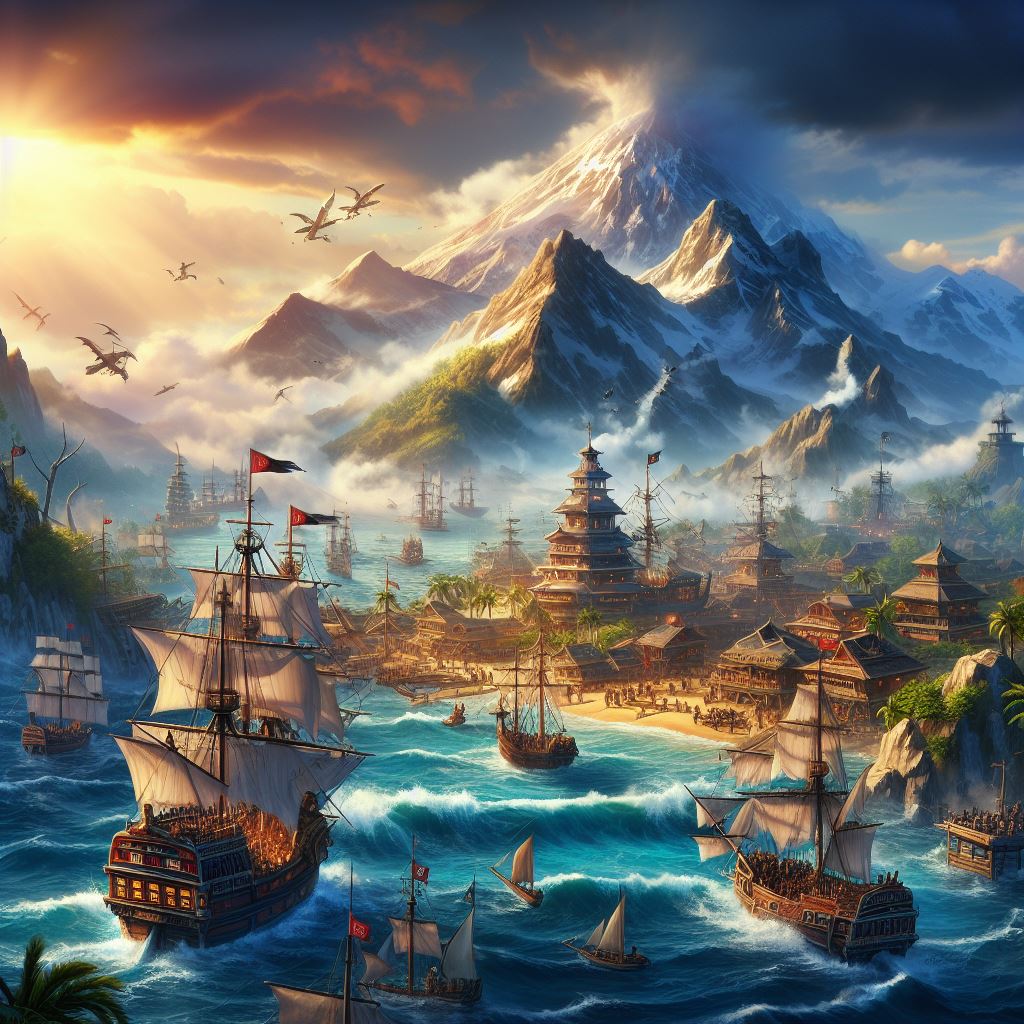
Embarking on a digital adventure across the vast, unpredictable seas, “Sea of Conquest: Pirate War” offers gamers an immersive experience into the world of naval warfare, piracy, and exploration. This comprehensive review, coupled with essential tips and tricks, aims to guide both novice and experienced players through the intricacies of the game, ensuring a journey filled with victories, strategic growth, and an understanding of the pirate ethos.
“Sea of Conquest: Pirate War” is a real-time strategy game that plunges players into the heart of the Age of Sail. It challenges participants to assume the role of a pirate captain, tasked with building a formidable fleet, conquering territories, and navigating through treacherous waters filled with rivals and mythical creatures. The game stands out for its detailed graphics, complex gameplay mechanics, and an engaging multiplayer feature that allows for alliances, trade, and combat with other players worldwide.
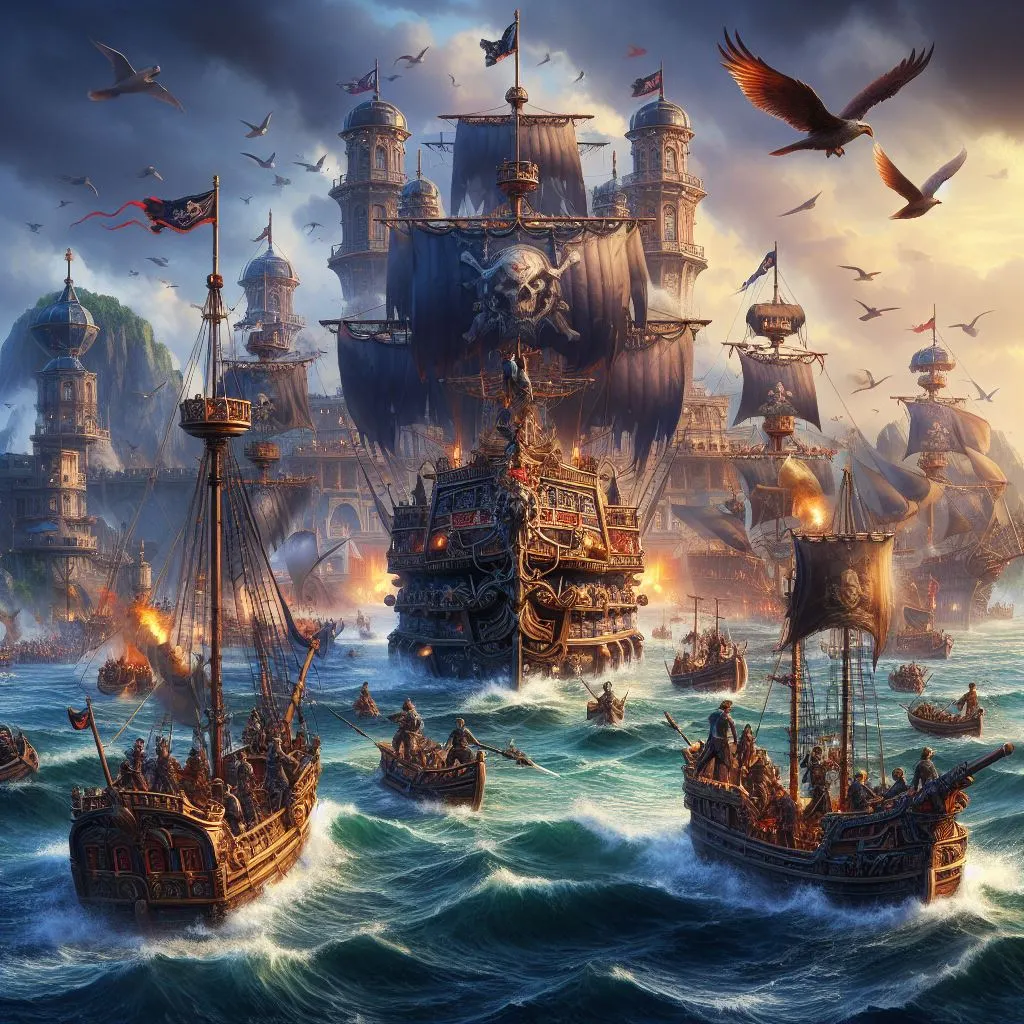
Graphics and Interface: The game dazzles with its attention to detail, from the meticulously designed ships to the dynamic weather system that affects gameplay. The user interface is intuitive, making it easy for players to navigate through the game’s various features and controls.
Gameplay Experience: “Sea of Conquest: Pirate War” offers a rich, strategic gameplay experience that rewards planning and tactical thinking. The diversity of missions, from treasure hunts to epic sea battles, ensures that no two playthroughs are alike.



Multiplayer Dynamics: The game’s multiplayer aspect adds a layer of complexity and excitement, fostering a sense of community and competition. The alliance feature, in particular, encourages teamwork and strategic alliances, adding depth to the gameplay.
Replayability: With its ever-evolving world and regular updates introducing new features and challenges, the game boasts high replayability, encouraging players to return to the seas for more adventures.
“Sea of Conquest: Pirate War” encapsulates the thrill of naval warfare and piracy, offering players a comprehensive experience of strategy, combat, and exploration. By adhering to the tips and tricks provided, players can navigate their way to becoming the most formidable pirate captain on the high seas. The game’s blend of strategic depth, engaging content, and dynamic interactions makes it a must-play title for fans of the genre.
In the world of “Sea of Conquest: Pirate War,” mastering the art of naval dominance requires more than just a strong fleet and a cunning strategy. It necessitates an understanding of the game’s economy, the ability to leverage the social aspects for tactical advantage, and the insight to navigate through the challenges posed by both human and AI opponents. This part of our guide delves deeper into the economic strategies, social dynamics, and advanced combat tactics that can elevate your gameplay and secure your position as a feared and respected pirate captain.
Success in “Sea of Conquest: Pirate War” is not solely determined by the battles won at sea but also by the economic decisions made off it. Here are some advanced tips for managing your economy:
The social aspect of “Sea of Conquest: Pirate War” plays a pivotal role in shaping the political landscape of the game. Here’s how to navigate these waters:
As you progress through the game, combat becomes more nuanced, with victory depending more on strategy than on brute force. Here are some advanced tactics:
By integrating these advanced economic strategies, social tactics, and combat maneuvers into your gameplay, you can build a legacy that will be remembered across the high seas. “Sea of Conquest: Pirate War” is a complex game that rewards strategic thinking, adaptability, and a deep understanding of its mechanics. Whether you’re engaging in high-stakes battles, forming alliances, or mastering the economic system, each decision you make will carve out your path to power and glory in this enthralling pirate world.
Diving into the uncharted waters of “Sea of Conquest: Pirate War” requires a captain to be not just a strategist but a visionary, seeing beyond the immediate battles to forge an empire that will endure through the ages. The final keys to mastering this digital realm lie not only in the accumulation of wealth and power but in the legacy you build through exploration, innovation, and the tales woven by your deeds.
Embarking on a voyage of discovery, let’s chart a course through the nuanced strategies that mark a true pirate legend.
In the vast expanse of “Sea of Conquest,” the secret coves and mist-shrouded islands hold more than just material wealth; they are the gateways to tales of old, waiting to bestow upon their finder not just riches but wisdom. Your journey should be as much about uncovering these hidden narratives as it is about conquering. Each island conquered, each secret unveiled adds to your legacy, transforming you from a mere marauder to a legend whispered about in the taverns across the seas.
Imagine, if you will, a night under the starlit sky, your crew gathered around as the bard sings tales of your most daring exploits. These stories, born from your adventures and battles, serve not just as entertainment but as a beacon, attracting skilled sailors and fierce warriors to your banner. Your legacy will grow with each tale, each song, inspiring loyalty and fear far beyond the reach of your cannons.
The heart of a pirate’s quest for dominance beats not just through the strength of their fleet but in the advancements they spearhead. Your pursuit of knowledge, whether it be through the capture of scholars or the exploration of ancient ruins, will unlock new horizons for your empire. The introduction of advanced navigational techniques, revolutionary ship designs, and weaponry will not only ensure your superiority in battle but also mark you as a pioneer, a captain at the vanguard of the Age of Sail.
Envision your haven not just as a fortress but as a crucible of ideas, where the greatest minds of the age gather to push the boundaries of what is known. By fostering a culture of innovation and curiosity, you encourage the development of new strategies, technologies, and even forms of governance. This intellectual capital will be as valuable as the gold in your coffers, setting you apart from rivals and carving your name into the annals of history.
The true test of a captain lies not in how they wield their sword but in how they navigate the complex tapestry of alliances and rivalries that define the world of “Sea of Conquest.” Your ability to read the political winds, to know when to strike a bargain or when to draw your blade, will determine your fate in this tumultuous realm.
Imagine a round table within your stronghold, where the most feared captains gather under a flag of truce. Here, alliances are forged, and empires are dismantled, not with gunfire, but with guile, wit, and the promise of shared spoils. Your role as the arbiter of these councils, able to broker peace or ignite war, will cement your status not just as a warrior but as a statesman, a leader among pirates.
In weaving together the threads of exploration, innovation, and diplomacy, you craft not just a tale of conquest but a legacy that will echo through the ages. “Sea of Conquest: Pirate War” is more than a game; it is a canvas upon which your saga will be painted, a saga of a captain who saw beyond the horizon, who understood that true power lies not in the might of one’s fleet but in the depth of one’s vision. As you set sail into the sunset, remember: the greatest treasure lies not at the end of a map, but in the legacy you leave behind.
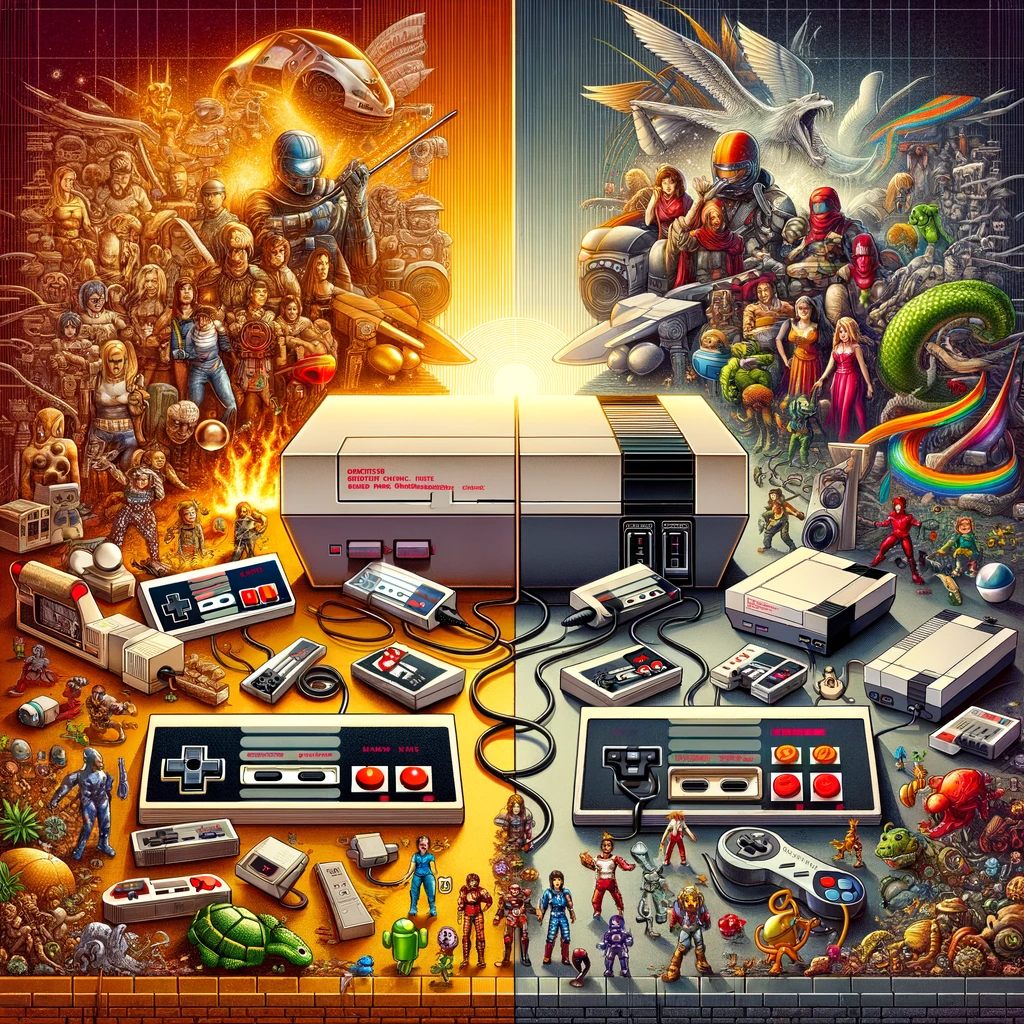
The Nintendo Entertainment System (NES) stands as a monumental figure in the world of video gaming, marking a pivotal turn in the industry and influencing the course of home entertainment in ways few could have anticipated. This comprehensive analysis aims to unravel the complex evolution of the NES, from its conception to its legacy, offering a thorough guide to understanding its impact and significance.
The story of the NES begins in the early 1980s, a time when the video game industry was grappling with the fallout of the infamous market crash. Nintendo, a Japanese company with a rich history in playing cards and toys, saw an opportunity to innovate and potentially revitalize the market. Spearheaded by Masayuki Uemura, the development of what would become the NES was both a response to and a departure from the prevailing trends of the time.
Nintendo’s approach was revolutionary, focusing on creating a robust, user-friendly console that prioritized game quality and hardware reliability. The design of the NES, with its front-loading cartridge slot, was inspired by VCRs, aiming to make the system feel more familiar and accessible in the living room. This design choice not only set the NES apart from its competitors but also helped mitigate the stigma associated with video game consoles following the crash.
The NES made its debut in Japan in 1983 as the Family Computer (Famicom) and was met with immediate success. However, the transition to the international market, particularly the United States, presented a unique set of challenges. The video game market in the US was skeptical, if not outright hostile, following the crash. Nintendo’s strategy involved rebranding the Famicom to the Nintendo Entertainment System, emphasizing entertainment over gaming to broaden its appeal.
The console’s release in the US in 1985 was a cautious affair, initially limited to a test market in New York City. The introduction of the Robotic Operating Buddy (R.O.B.) and the Light Zapper gun were instrumental in positioning the NES as a novel and multifaceted entertainment system. These peripherals, along with a strong lineup of launch titles, helped the NES gain a foothold in the market.
At the heart of the NES’s success was its game library, which introduced titles that have since become synonymous with video gaming. “Super Mario Bros.,” developed by Shigeru Miyamoto and Takashi Tezuka, was groundbreaking. Its scrolling screens, precise control, and expansive world set a new standard for game design. The game’s success was not just a triumph for Nintendo but a catalyst for the industry, inspiring a generation of game developers.
Nintendo’s commitment to controlling the quality of games available on the NES was another revolutionary step. The introduction of the Nintendo Seal of Quality assured consumers that games met a certain standard, addressing the issue of market saturation with low-quality titles that had contributed to the crash. This control over the game library helped maintain the console’s reputation and ensured a consistent experience for gamers.
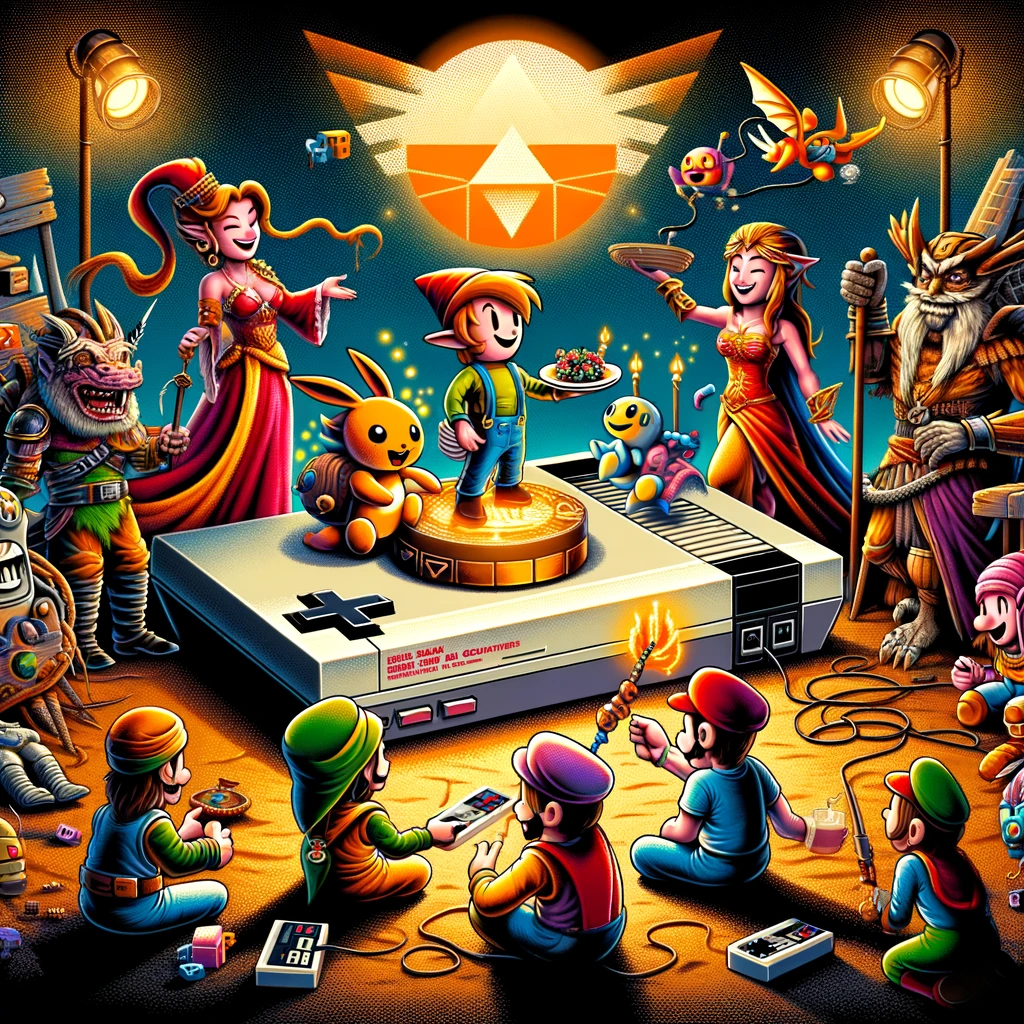
The NES’s impact on the gaming industry and culture at large is immeasurable. It not only saved the industry from the brink of collapse but also set the standards for future gaming consoles. Its success laid the groundwork for Nintendo’s future innovations, from the Super Nintendo Entertainment System (SNES) to the modern Switch. The NES introduced features that have become staples in gaming, such as cross-platform franchises, game save functionality, and the concept of console generations.
Beyond its technological and financial achievements, the NES has left an indelible mark on popular culture. Characters like Mario and Link have transcended gaming, becoming cultural icons. The console has influenced music, movies, and art, and continues to inspire nostalgia and reverence among fans of all ages.
In conclusion, the NES’s evolution from a risky venture in a beleaguered market to a beloved entertainment staple is a testament to Nintendo’s innovation, perseverance, and understanding of what gamers wanted. By delivering quality games within a reliable and user-friendly system, Nintendo not only revived the industry but also shaped the future of home entertainment. The NES’s legacy is not just in the games it played host to or the technology it pioneered, but in the generations of gamers it inspired and the countless developers who follow in its footsteps, striving to capture that same magic.
Continuing our exploration into the evolution of the Nintendo Entertainment System (NES), we delve deeper into the strategic moves and technological advancements that propelled the console to legendary status. This section of our analysis focuses on the strategies Nintendo employed to dominate the market, the expansion of the NES’s game library, and the technological innovations that set it apart from competitors.
Nintendo’s strategic approach to expanding the NES’s game library was multifaceted. By fostering relationships with third-party developers, Nintendo ensured a steady stream of diverse and high-quality games. This was a significant departure from the industry norm, where console manufacturers primarily relied on in-house game development. The licensing system Nintendo implemented required third-party games to adhere to strict quality and content standards, further solidifying the NES’s reputation for superior game quality.
In 1988, Nintendo launched the Nintendo Power magazine, a masterstroke in marketing and community engagement. This publication not only provided news, tips, and strategies for popular NES games but also created a direct line of communication between Nintendo and its audience. It cultivated a loyal fan base and contributed significantly to the NES’s cultural footprint.
The NES was renowned for its robust hardware design. Its 8-bit processor and custom-made Picture Processing Unit (PPU) allowed for graphics and sound capabilities that were revolutionary at the time. These technological advancements enabled games with more complex graphics and smoother animations than were previously possible on home consoles. The introduction of accessories like the NES Zapper and the Power Glove, although not universally successful, showcased Nintendo’s commitment to innovation and enhancing the gaming experience.
The technological capabilities of the NES facilitated significant breakthroughs in game design. Games like “The Legend of Zelda” introduced battery-backed memory, allowing players to save their progress for the first time in a home console game. This feature transformed the gaming experience, enabling more complex and lengthy narratives. “Metroid” and “Castlevania” were pioneers in the action-adventure genre, offering non-linear gameplay that encouraged exploration and backtracking.
The NES’s influence extended far beyond Japan and the United States. In Europe and other parts of the world, the console was introduced with localized versions, ensuring its global appeal. Despite the differences in video game culture and preferences across these regions, the NES managed to capture a significant market share, thanks in part to its diverse game library and the universal appeal of its flagship titles.
Although online gaming was not a feature of the NES during its prime, the console played an indirect role in shaping the future of online gaming. The NES facilitated the development of gaming communities and fan-driven content, laying the groundwork for the social aspect of gaming that would become crucial in the online gaming era. Games like “Super Mario Bros. 3” and “Final Fantasy” fostered deep community engagement, with players sharing tips, strategies, and their own narratives, foreshadowing the interactive and communal nature of online gaming.


🧟 Resident Evil 9: Release Date, Leaked Trailer & New Story Details In 27 February…

Top 5 Open-World Games in 2025: Explore Endless Possibilities Open-world games have revolutionized the gaming…

In this section, we’ve seen how the NES’s strategic market moves, technological innovations, and expansive game library not only solidified its place in gaming history but also set the stage for the future of the industry. Nintendo’s vision for the NES went beyond merely selling a product; they aimed to create an experience that resonated with users and stood the test of time. The console’s enduring legacy is a testament to the success of that vision, influencing game design, technology, and culture for decades to come.
As we further dissect the monumental journey of the Nintendo Entertainment System (NES), it’s essential to delve into the legacy and the enduring influence it holds within the gaming industry and its community. This final segment explores the NES’s lasting impact, the revival of retro gaming, and how Nintendo has leveraged its storied past to shape its future endeavors.
The NES didn’t just create a market for video games; it nurtured a generation of gamers who would go on to define the future of the industry. Its influence extends into the realm of game development, where today’s developers cite NES games as pivotal inspirations for their careers. The console’s emphasis on gameplay over graphics taught valuable lessons in design principles that remain relevant.
The rise of retro gaming has seen the NES regain popularity among collectors and new gamers alike, drawn to the charm and challenge of 8-bit gaming. The collectors’ market for NES games, consoles, and paraphernalia has exploded, with rare titles fetching thousands of dollars. This resurgence is a testament to the NES’s lasting appeal and the quality of its game library.
Nintendo has skillfully leveraged the NES’s legacy to fuel its modern endeavors. The release of the NES Classic Edition in 2016, a miniaturized replica of the original console preloaded with 30 classic games, was met with overwhelming demand. This move, coupled with the introduction of NES games on the Nintendo Switch Online service, has allowed new generations of gamers to experience the console’s iconic library, bridging the gap between the past and the present.
The NES’s influence can be seen in the current gaming culture, where there is a growing appreciation for the simplicity and directness of classic games. Indie developers, in particular, have embraced the aesthetic and gameplay mechanics of NES-era games, producing titles that feel both nostalgic and fresh. This trend speaks to the enduring appeal of the NES’s game design principles.
The Nintendo Entertainment System’s legacy is not confined to the plastic and silicon from which it was made. It resides in the memories of those who played it, the culture it helped shape, and the future it helped to define. The NES was more than just a console; it was a cultural phenomenon that transcended geographical and generational boundaries, laying the foundation for the modern video game industry.
As we reflect on the NES’s journey, from its humble beginnings to its position as a revered icon, it’s clear that its impact goes beyond mere numbers and market shares. It changed how we interact with digital worlds, introduced characters and stories that have become part of our cultural lexicon, and demonstrated the power of innovation and quality in crafting an enduring legacy.
Nintendo’s ability to navigate the NES through the challenges of its time, to innovate within the constraints of technology, and to ultimately create a platform that would become the cornerstone of video game nostalgia, underscores the importance of vision in the tech industry. The NES’s story is a powerful reminder of how creativity, when coupled with strategic foresight, can create experiences that last a lifetime and beyond.
In the end, the evolution of the Nintendo Entertainment System encapsulates the essence of gaming: an ever-changing landscape where innovation, nostalgia, and community converge. As we look to the future, the lessons learned from the NES era will undoubtedly continue to influence and inspire, proving that great design, much like the joy of gaming, is timeless.
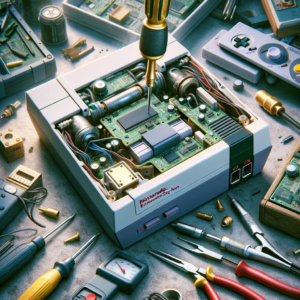
The allure of retro gaming consoles is undeniable. These classic systems, from the NES to the Sega Genesis, have captured the hearts of gamers for generations. However, as time passes, these beloved devices can face various issues due to aging hardware and outdated technology. This comprehensive guide is dedicated to helping enthusiasts and collectors alike in repairing and maintaining their cherished retro consoles, ensuring these timeless gaming treasures continue to provide joy and nostalgia.
The Importance of Regular Maintenance
Before diving into the specifics of repair, it’s essential to understand the importance of regular maintenance. Retro consoles, much like any electronic device, require care to function optimally. Dust accumulation, connector corrosion, and thermal stress are common issues that can be mitigated with routine maintenance.
Identifying Common Issues
Common issues with retro consoles include cartridge reading errors, audio-video problems, power supply issues, and controller malfunctions. Learning to identify these problems is the first step in effective troubleshooting.
Essential Tools
A well-equipped toolkit is vital for any repair work. Key tools include:
Safety Precautions
Always prioritize safety when working with electronics. Ensure your workspace is well-ventilated, avoid working on a powered-on console, and wear anti-static wristbands when handling circuit boards.
Cleaning Internal Components
Repairing Common Cartridge Issues
Cartridge-based systems often face reading errors due to dirty or damaged contacts.
Audio-Video Troubleshooting
Poor audio or video output can often be traced back to connection issues or aging capacitors.
Cleaning Techniques
Environment Matters
Storage Tips
Common Console Issues and Solutions
Essential Tools for DIY Repairs
Repair or Replace? When facing complex issues like motherboard failures, consider the cost-benefit of repairs versus replacements. In some cases, sourcing parts for vintage consoles can be more expensive than finding a replacement unit.
As we journey through the fascinating world of retro console care, remember that patience and attention to detail are your best tools. Stay tuned as we delve deeper into advanced repair techniques and customization tips to elevate your retro gaming experience to the next level.
After covering the basics of console maintenance and minor repairs, we now venture into the more intricate realm of advanced repair techniques. These methods are designed for those instances where standard troubleshooting doesn’t resolve the issues. Here, we’ll explore some of the more complex problems and their solutions, ensuring your retro gaming experience remains uninterrupted.
Capacitors in retro consoles, especially those from the 1980s and 1990s, are prone to failure over time. Symptoms of capacitor issues include distorted audio, dimming screens, or even complete failure to power on.
Damaged traces (the thin lines of copper on the motherboard that connect components) can cause a variety of issues. Repairing them requires precision and patience.
Sometimes, the issue lies within a specific chip on the motherboard. Replacing a chip is a delicate process and usually the last resort.
While repairing your console is essential, customization and upgrades can enhance its functionality and longevity.
Older consoles primarily used RF or composite outputs, which are not ideal for modern TVs. Upgrading to HDMI can drastically improve video quality.
Custom shells and controllers not only refresh the look of your console but can also provide ergonomic improvements.
Overheating can shorten the lifespan of your console. Simple cooling enhancements can make a significant difference.
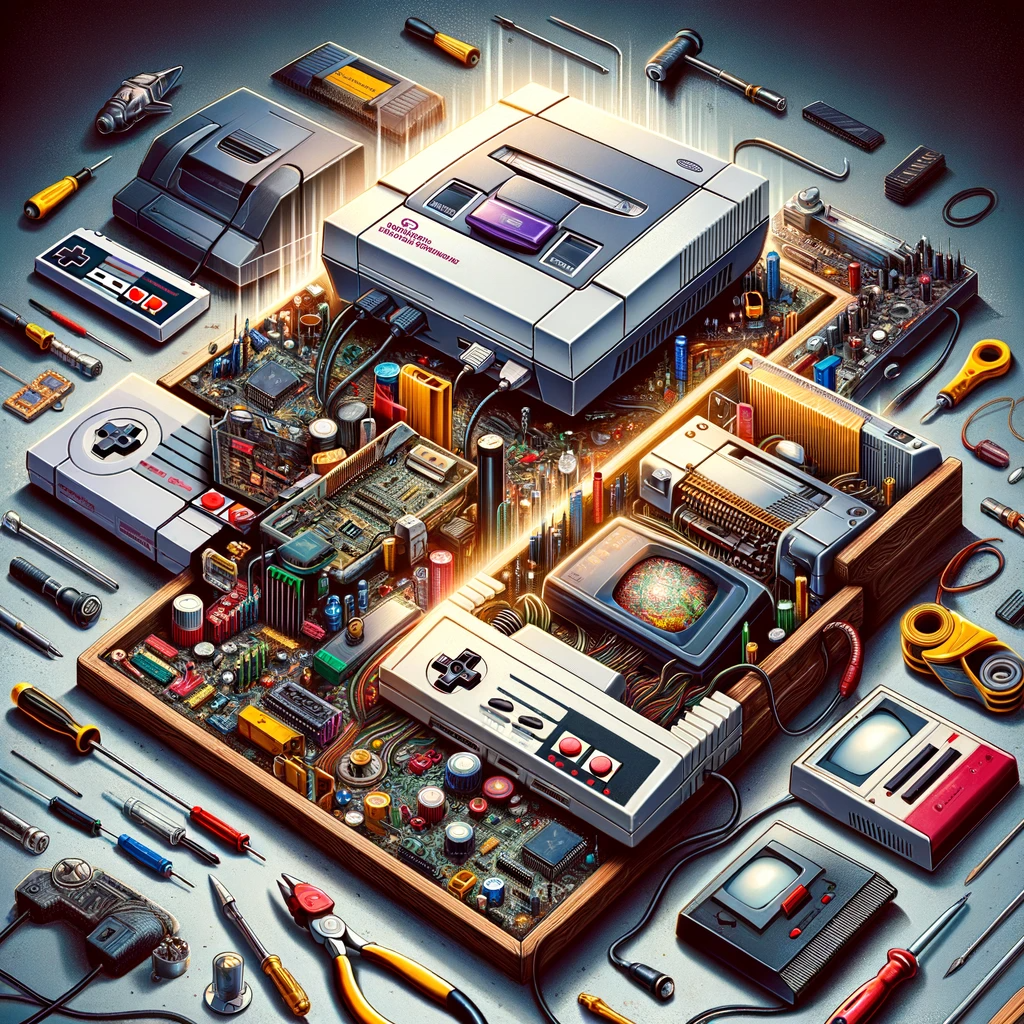
In this segment, we’ve explored the more advanced aspects of retro console care, from intricate repairs to exciting customizations. By understanding and applying these techniques, you not only preserve these classic gaming machines but also enhance your gaming experience.
Stay tuned for the final part of this guide, where we’ll dive into the world of preventive measures and long-term care strategies to ensure that your retro consoles continue to provide joy and nostalgia for years to come.
As we reach the final chapter of our definitive guide on repairing and maintaining retro consoles, it’s crucial to focus on long-term care and preventive measures. These strategies will ensure that your consoles not only function well today but continue to do so for years to come.
Consistent care is key to preserving the life of your retro gaming consoles. Here’s a simple routine to follow:
Storing your console correctly can greatly extend its lifespan. Here are some tips:
Sometimes, upgrading parts of the console can significantly extend its useful life.
🧟 Resident Evil 9: Release Date, Leaked Trailer & New Story Details In 27 February…
Top 5 Open-World Games in 2025: Explore Endless Possibilities Open-world games have revolutionized the gaming…
Staying informed and involved with the retro gaming community can provide valuable resources and support.
While DIY repairs can be fulfilling, sometimes professional help is needed, especially for complex issues.
In this guide, we’ve traversed the journey from basic maintenance to advanced repairs, and finally, to long-term preservation strategies for retro consoles. These timeless pieces of technology not only represent a nostalgic era of gaming but also offer a unique charm that modern consoles have yet to replicate. By following this comprehensive guide, you ensure that these retro gaming machines continue to bring joy and nostalgia to gamers for many more years to come.
Your retro console is more than just a gaming device; it’s a piece of history, a slice of childhood memories, and a testament to the evolution of technology. Treat it with care, and it will remain a treasured part of your gaming collection, a bridge between past and present, connecting generations of gamers through the love of classic gaming experiences.
The 10 Best Retro Arcade Games of the 90s: A Look Back
The 1990s were a golden era for arcade games, a period that witnessed the birth and popularization of numerous titles that have left an indelible mark in the history of video gaming.
We take a nostalgic journey back to the vibrant arcades of the 90s, highlighting the top 10 retro arcade games that defined a generation. From the pixelated adventures to the immersive fighting scenes, these games not only represent technological innovation but also a cultural phenomenon that transcended the boundaries of the arcade.


Amazon Luna: Review + Analysis | The Future of GameStreaming The digital gaming landscape is…

🧟 Resident Evil 9: Release Date, Leaked Trailer & New Story Details In 27 February…
Top 5 Open-World Games in 2025: Explore Endless Possibilities Open-world games have revolutionized the gaming…
In conclusion, these iconic games from the 1990s are much more than mere relics of arcade gaming; they represent a groundbreaking chapter in the evolution of video games. Each game, with its unique mechanics and captivating storylines, contributed significantly to the technological advancements and cultural dynamics of the era. They were not just games, but milestones that showcased the potential of interactive entertainment.
As we reflect on these classics, we uncover a rich tapestry of innovation, competition, and community that still influences modern gaming. For enthusiasts and new gamers alike, understanding the legacy of these arcade masterpieces offers invaluable insights into the gaming industry’s journey. This deep dive into the top 10 retro arcade games of the 90s serves not only as a trip down memory lane but as a testament to the enduring impact and timeless appeal of these games. Their stories, challenges, and triumphs continue to resonate with players around the world, securing their place in the digital pantheon of gaming history.
The integration of Artificial Intelligence (AI) in various fields has been nothing short of revolutionary, and its impact on video game development is particularly significant. AI’s ability to learn, adapt, and perform tasks that typically require human intelligence has opened up unprecedented possibilities in the gaming industry. This article delves into how AI is reshaping the landscape of game development and what future advancements we might anticipate.
AI’s most striking contribution is the development of dynamic and adaptive game worlds. These environments respond in real-time to player actions, ensuring each gaming session is unique. AI algorithms can modify game environments, enemy behavior, and even storylines based on player decisions and styles. This dynamic adjustment not only keeps players engaged but also adds a layer of personalization to the gaming experience. Imagine a game where the narrative and challenges evolve based on your choices, making each playthrough a distinct experience.
Non-playable characters (NPCs) play a pivotal role in enriching the gaming experience. AI elevates these characters to new heights of complexity and realism. NPCs powered by AI can learn and evolve based on player interactions, leading to more authentic and unpredictable gaming scenarios. This advancement not only enhances the gameplay but also adds depth to the narrative, as NPCs can now provide more nuanced and context-sensitive responses.
The integration of Natural Language Processing (NLP) is transforming player-game interactions. Games equipped with advanced NLP allow for more sophisticated and natural dialogues with NPCs. This technology enables players to communicate with game characters in a way that feels more conversational and less scripted. The implications for storytelling and character development are immense, opening doors to more immersive and emotionally engaging narratives.
AI is revolutionizing game design by enabling the automated generation of levels and scenarios. Machine learning algorithms can create diverse and intricate game environments, significantly reducing the time and effort required in the design process. This automation not only accelerates development but also introduces an element of unpredictability and variety, as AI can generate unique and challenging game scenarios that might not have been conceived by human designers.
Game testing, a critical yet time-consuming phase, is being transformed by AI. Automated testing through AI can quickly identify and rectify bugs and issues, streamlining the development process. This efficiency not only shortens the time to market but also enhances the overall quality of the game, ensuring a more polished and bug-free player experience.
🧟 Resident Evil 9: Release Date, Leaked Trailer & New Story Details In 27 February…
Top 5 Open-World Games in 2025: Explore Endless Possibilities Open-world games have revolutionized the gaming…
AI is at the forefront of creating personalized gaming experiences. By analyzing player data, AI can tailor games to suit individual preferences, skill levels, and interests. This personalization extends beyond adaptive difficulty levels to include customized narratives, challenges, and even aesthetic elements, offering a truly individualized gaming experience.
In the realms of Virtual Reality (VR) and Augmented Reality (AR), AI’s impact is profound. AI enhances the immersive quality of these experiences by dynamically adjusting virtual environments and facilitating more natural interactions within the game. This technology not only improves the realism of VR and AR games but also expands the potential for innovative gameplay and storytelling within these platforms.
The future of gaming, propelled by AI, is poised to be a landscape of continuous innovation and excitement. The promise of unique, personalized gaming experiences, coupled with more efficient development processes, benefits both players and developers. As AI technology advances, we can expect to see games that are not only more immersive and intelligent but also more surprising, continually pushing the boundaries of what is possible in the gaming world.
As we reflect on the extraordinary advancements in AI and their impact on the future of gaming, it’s clear that we are standing at the threshold of a new era in digital entertainment. The integration of AI in game development is not just about technological progress; it’s about creating deeper, more immersive experiences that resonate on a personal level with gamers.
From NPCs that can learn and adapt, to game worlds that evolve with each decision, AI is shaping games to be more than just a pastime — it’s transforming them into dynamic stories where every player can be the protagonist. The future of gaming, empowered by AI, promises a journey where the boundaries between the virtual and real worlds blur, offering experiences we’ve only begun to imagine. As gamers, developers, and enthusiasts, we are witnessing a revolution that is redefining entertainment, creativity, and interaction. The next chapter of gaming is being written right now, and it’s not just about playing a game; it’s about living a unique story crafted by the incredible potential of artificial intelligence.
Netflix, the renowned streaming service, is venturing boldly into the mobile gaming arena. With a repertoire of over 75 mobile games featuring renowned IPs such as “Grand Theft Auto”, “Love Is Blind”, “Monument Valley”, and “Oxenfree”, Netflix is emerging as a formidable player in this domain
The company is exploring various monetization strategies for its games, including in-app purchases, premium pricing for select titles, and ad placements in games for subscribers of its ad tier. Netflix Co-CEO Greg Peters emphasizes a unique gaming experience, focusing on player enjoyment without the need for ads or in-game payments.
Netflix, traditionally opposed to an ad-supported tier and password sharing crackdowns, shifted its stance after experiencing its first subscriber loss in a decade in 2022. This change reflects the company’s flexibility in adapting to market conditions, as seen in their workforce reduction and price increases in early 2023.
In 2022, Netflix sought a game director for an AAA PC game, indicating significant investment in high-budget gaming projects. With development budgets for AAA games reaching upwards of $200 million, Netflix is contemplating charging for these high-end games.
During its Geeked Week celebrations, Netflix announced the addition of critically acclaimed games like “Hades” and “Braid: Anniversary Edition”, alongside gothic dungeon crawler “Death’s Door” and the fast-paced “Katana Zero”. Additionally, they are developing original mobile games based on popular Netflix film and TV properties. The release of “The Witcher: Sirens of the Deep”, an animated movie, further showcases Netflix’s commitment to diverse entertainment experiences.
Top 5 Open-World Games in 2025: Explore Endless Possibilities Open-world games have revolutionized the gaming…

Mirandus Review 2024: The Blockchain Game’s Pros and Cons In the ever-evolving landscape of blockchain…
Netflix’s management has expressed intentions to enter the cloud gaming market, potentially adding significant value to its current offerings. Increased R&D spending in 2024 reflects the company’s commitment to intensifying its gaming business development. Although the cloud gaming market is still nascent, it is expected to grow rapidly, and Netflix’s foray into this segment could enhance customer loyalty and open new revenue streams.
Netflix’s strategic pivot towards mobile and cloud gaming illustrates its agility in adapting to changing market dynamics and consumer preferences. By leveraging its existing content library and investing in new gaming experiences, Netflix is well-positioned to make a significant impact in the mobile gaming industry. With continued investment and innovative strategies, Netflix aims to not just participate, but dominate this rapidly evolving market.